




Why Is My Well Water Brown? Causes, Fixes & Complete Treatment Guide
Published August 10, 2026 • By Dubya Water
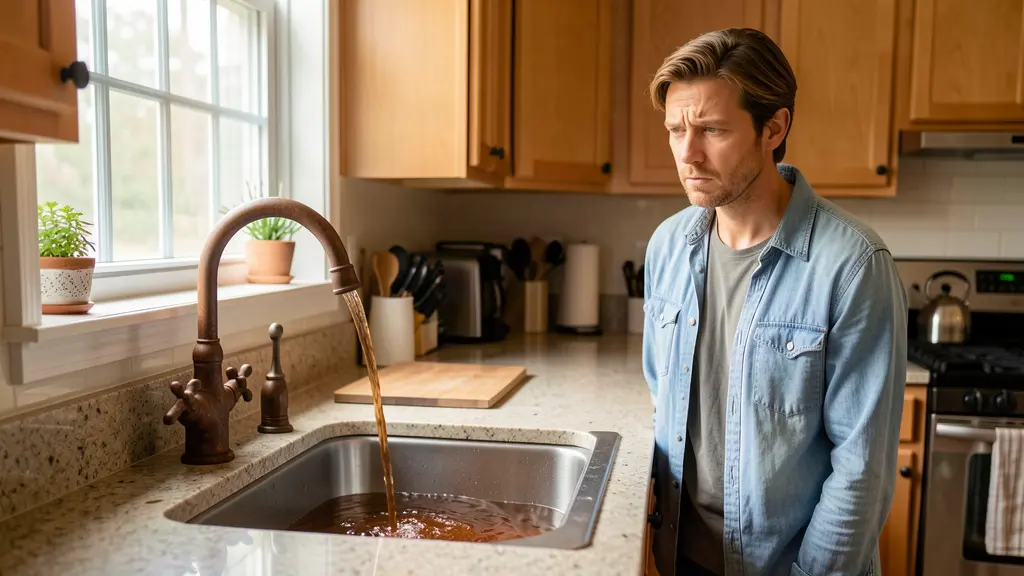
Brown well water is almost always caused by iron, manganese, sediment, tannins, or iron bacteria entering your groundwater supply. In the South Carolina Midlands — where private wells draw from iron-rich aquifers under Orangeburg, Bamberg, and Calhoun counties — discolored tap water is the #1 homeowner complaint. The cause determines the fix: iron filtration removes rust-colored staining, sediment filters catch sand and silt, tannin systems handle tea-colored discoloration, and UV disinfection kills bacteria. Here is how to diagnose your brown water and get clear water flowing again.
If you turn on your kitchen faucet in Orangeburg or Rowesville and see brown, rusty, or tea-colored water, you are not alone. Discolored well water is the most frequent service call Dubya Water receives across the Orangeburg County area. Whether you are searching for "brown well water near me" or trying to figure out why your water suddenly changed color, this guide covers every cause, how to identify yours, and the exact treatment to get your water clear again.
Free Well Water Test — Know What Is in Your Water
A certified technician tests for iron, manganese, pH, hardness, TDS, and sediment. No obligation.
Schedule Free TestWhat Causes Brown Well Water?
The color and appearance of your brown well water tells you what is causing it. Here are the six most common culprits in South Carolina wells:
1. Iron and Manganese (Rust-Colored Water)
Iron is the #1 cause of brown well water across the Orangeburg County region. South Carolina's coastal plain sits on iron-rich limestone and sedimentary deposits. As groundwater filters through these formations, it dissolves ferrous iron — invisible when clear but turning rusty orange or reddish-brown when it hits air or chlorine. Manganese, often present alongside iron, adds a brownish-black tint. If your water comes out clear but turns brown after sitting in a glass, you have dissolved (ferrous) iron. If it comes out already brown, you have oxidized (ferric) iron. Both are treatable with a properly sized iron filtration system.
2. Sediment and Sand (Muddy or Cloudy Brown Water)
Brown sediment in well water can be sand, silt, clay, or rust particles from old pipes. In Elloree and Denmark, recent well drilling or pump replacement work often stirs up sediment. Old galvanized steel pipes in homes built before the 1980s can also shed rust particles. A sediment filter at the point of entry catches these particles. For heavy sediment loads, a spin-down filter with an automatic flush is the most cost-effective solution.
3. Tannins (Tea-Colored Yellowish-Brown Water)
Tannins come from decaying leaves, roots, and organic matter. Shallow wells and those near wetlands or swampy areas are most susceptible. In parts of Bamberg County where the water table meets organic-rich topsoil, tannins produce a yellowish-brown tea color that does not settle out. Unlike iron, tannins do not cause staining but can make water unappealing to drink.
4. Iron Bacteria (Orange-Brown Slime)
Iron bacteria are naturally occurring microorganisms that feed on iron in the water. They produce a distinctive orange-brown slime that accumulates in toilet tanks and plumbing fixtures. While not a health risk, they cause persistent brown discoloration and musty odors. Treatment requires disinfection (shock chlorination or UV) combined with iron filtration.
5. Well Pump or Pressure Tank Failure
A failing well pump can draw sediment from the bottom of the well, producing brown water. A waterlogged pressure tank or corroded tank interior can also release rust particles. If your brown water appeared suddenly after years of clear water, the pump or tank likely needs inspection.
6. Heavy Rain Surface Water Infiltration
Heavy rain can cause surface water to infiltrate shallow wells, stirring up sediment and organic matter. This is common in Branchville and Cordova after spring storms. If your water turns brown only after heavy rain, a well inspection should be your first step to check for casing cracks or seal issues.
How to Diagnose the Cause: Brown Well Water Diagnostic Guide
Color, timing, and location tell you the cause. Use this table to narrow it down:
Brown Well Water Diagnostic Table
| Appearance | Likely Cause | Solution |
|---|---|---|
| Rusty orange-brown | Iron or manganese | Iron filtration (AIO or catalytic media) |
| Tea-colored yellowish-brown | Tannins | Anion exchange or carbon filtration |
| Muddy or cloudy brown | Sediment or sand | Sediment pre-filter (spin-down or cartridge) |
| Orange slime in toilet tank | Iron bacteria | Shock chlorination + iron filter + UV |
| Brown only after heavy rain | Surface water infiltration | Well inspection + sediment filter + UV |
| Brown only from one faucet | Plumbing rust in old pipes | Pipe replacement or point-of-use filter |
Is Brown Well Water Safe to Drink?
In most cases, brown well water caused by iron, manganese, or sediment is not a health hazard. Iron and manganese are essential minerals the body needs in small amounts. However, there are exceptions:
- If bacteria is present: Brown water from iron bacteria may indicate conditions that allow harmful bacteria to thrive. A bacteria test is recommended.
- If tannins are present: Tannins are harmless, but their presence in shallow wells means surface water is reaching your groundwater — and surface water can carry pathogens.
- If the water smells like rotten eggs: Brown water with a sulfur smell indicates hydrogen sulfide, which often accompanies iron. The combination needs treatment with an iron filter that also handles sulfur.
The only way to know for certain is a professional water test. Dubya Water provides free on-site testing for homeowners in Orangeburg, Rowesville, Cordova, Bowman, Bamberg, and the surrounding areas.
How to Fix Brown Well Water: Treatment Solutions
Iron Filtration Systems
For iron-caused brown water, the most effective solution is an air injection oxidation (AIO) iron filter. These systems use compressed air to oxidize dissolved iron, converting it into solid particles that are trapped by a catalytic media bed. AIO systems remove iron up to 15-30 ppm, manganese, and hydrogen sulfide simultaneously. They are the standard fix for brown well water across Bamberg and Denmark County homes. Dubya Water installs and services AIO iron filters with a 10-year warranty.
Sediment Filters
For sediment-caused brown water, a whole-home sediment filter at the point of entry catches sand, silt, and rust particles. Spin-down filters with reusable mesh screens work best for coarse sediment. Cartridge-style filters (5-50 micron) handle finer particles. A sediment filter also protects downstream iron filters, softeners, and appliances from particulate damage.
Tannin Removal Systems
For tea-colored water from tannins, an anion exchange system with specialized tannin-removal resin is the standard solution. Activated carbon filtration can also reduce tannin levels, especially when combined with sediment pre-filtration. Homes near Elloree and Branchville with shallow wells often benefit from tannin removal systems.
Complete Multi-Stage Systems
Many homes in Cope and Norway have water with multiple issues — iron, hardness, sediment, and sometimes bacteria. A complete system might include: sediment pre-filter → iron filter → water softener → UV disinfection. Each stage addresses a specific contaminant, and the system is sized to your household flow rate and test results. Contact Dubya Water for a custom system design.
Stop Living With Brown Well Water
Free water test diagnoses the exact cause. We recommend only what your water actually needs.
Schedule Free TestBrown Well Water Treatment Cost in South Carolina
The cost of treating brown well water varies by cause and system type. Typical price ranges for SC Midlands homeowners:
- Iron filtration system (AIO): $1,800 to $4,500 installed, depending on flow rate and iron levels
- Sediment filter (spin-down): $150 to $500 installed
- Tannin removal system: $1,200 to $3,000 installed
- Complete multi-stage (iron + softener + UV): $3,000 to $7,000 installed
- Well water testing and diagnosis: Free through Dubya Water
All systems installed by Dubya Water come with a 10-year warranty and free on-site estimates. We serve Orangeburg, Rowesville, Cordova, Bowman, Bamberg, Denmark, Elloree, Branchville, Cope, Norway, and all surrounding communities.
Step-by-Step: How to Get Clear Water
- Diagnose the cause — Observe the color (rusty, tea-colored, or muddy) and note when it appears.
- Test your water — Get a professional test that measures iron, manganese, tannins, pH, hardness, and sediment.
- Install the right treatment — Iron filter for rust-colored water, sediment filter for muddy water, tannin system for tea-colored water.
- Add pre-filtration — A sediment filter protects your main treatment system and extends its life.
- Test again — Confirm the treatment is working and your water is clear.
- Maintain the system — Replace filters on schedule, clean the iron filter media annually, and test water once a year.
Frequently Asked Questions About Brown Well Water
Why is my well water brown all of a sudden?
Sudden brown water usually means a well pump failure, pressure tank issue, or recent well drilling nearby stirred up sediment. If your water was clear for years and turned brown overnight, start with a well inspection to rule out mechanical issues, then test for iron and bacteria.
Why does my well water turn brown after it rains?
Heavy rain can cause surface water infiltration into shallow wells, stirring up sediment and organic matter. This is common in Branchville and Cordova after spring storms in South Carolina. A well inspection and sediment filter are the first steps.
Will a water softener fix brown well water?
No. Water softeners remove calcium and magnesium (hardness), not iron, sediment, or tannins. In fact, softeners can be damaged by high iron levels. You need an iron filter BEFORE the softener to protect the resin bed. Read our water softener guide for more details.
Can brown well water damage my plumbing?
Yes. Iron and sediment accumulate inside pipes, reducing water pressure and eventually clogging fixtures. Iron stains are acidic and can etch porcelain. Sediment wears down valve seats and can damage washing machine components. Treating the water protects both your health and your home's plumbing investment.
Does reverse osmosis remove brown color from well water?
Yes, reverse osmosis removes iron, tannins, and sediment at the point of use (under the kitchen sink). However, RO is a point-of-use solution — it does not protect the rest of your home. For whole-home brown water treatment, an iron filtration system at the point of entry is required. See our full RO vs iron filter comparison.
How much does well water testing cost near me?
Professional well water testing in Orangeburg County typically costs $30 to $150 depending on the panel. Dubya Water provides free on-site water testing for homeowners across Orangeburg, Rowesville, Cordova, Bowman, Bamberg, Denmark, Elloree, Branchville, Cope, and Norway. The test covers iron, manganese, pH, hardness, TDS, sulfur, and bacteria indicators.