Does Reverse Osmosis Remove Iron from Well Water?
Published July 6, 2026 • By Dubya Water
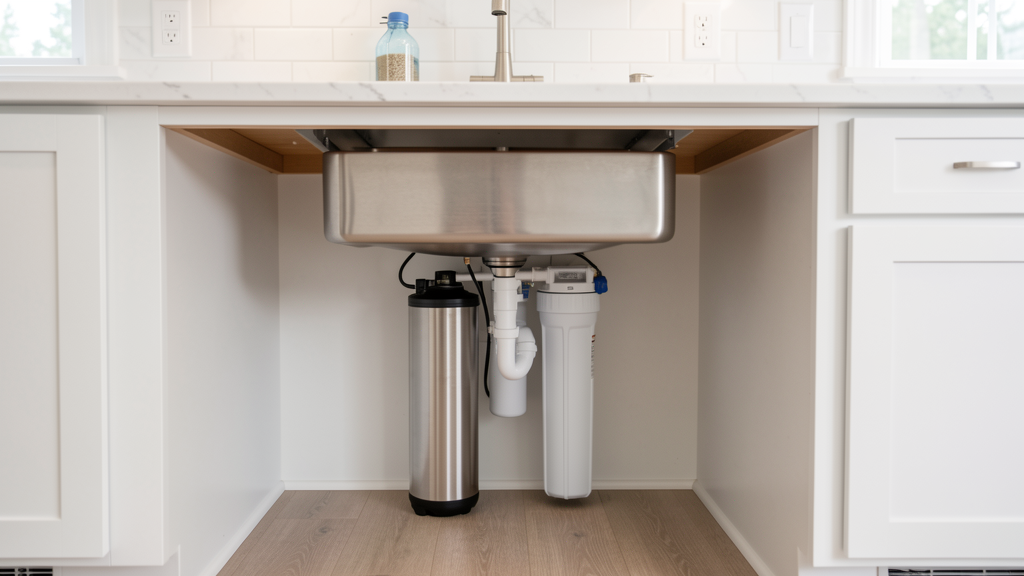
Yes, reverse osmosis can remove iron from well water, but only under specific conditions. Reverse osmosis systems effectively remove ferric iron (rust particles visible as red sediment) through physical filtration. However, dissolved ferrous iron — the kind that makes clear water turn red or brown after exposure to air — can slip through or quickly foul the RO membrane. For most South Carolina homes with well water, the best approach is a whole-house iron filter paired with a point-of-use RO system for drinking water. This guide explains exactly when RO works for iron removal, when it doesn't, and what Orangeburg SC homeowners should install instead.
What Type of Iron Does Reverse Osmosis Remove?
Understanding the two types of iron in well water is critical to choosing the right treatment:
- Ferric iron (Fe³⁺): Visible rust particles that make water look red, orange, or brown. These are large enough that an RO membrane (typically 0.0001 micron pore size) can physically block them. A sediment pre-filter before the RO membrane extends its life significantly.
- Ferrous iron (Fe²⁺): Dissolved iron that comes out of the tap clear but turns red when exposed to air. These dissolved particles are small enough to pass through or clog the RO membrane. Ferrous iron above 0.3 mg/L will cause rapid membrane fouling.
- Bacterial iron: Iron bacteria create a slimy reddish-brown biofilm that rapidly clogs RO membranes, pre-filters, and plumbing. This requires disinfection (chlorination or UV) before any filtration.
In Orangeburg SC, well water frequently contains both ferric and ferrous iron due to the region's limestone and iron-rich groundwater. Testing reveals which type you have and at what concentration.
Can Iron Damage Your Reverse Osmosis System?
Yes — and this is the most common mistake homeowners make. Running iron-laden well water directly through an RO system without pre-treatment leads to:
- Membrane fouling: Iron particles coat the RO membrane surface, reducing water production by 50-80% within months. The membrane becomes irreversibly clogged.
- Pre-filter exhaustion: Sediment and carbon pre-filters clog faster, requiring replacement every 2-4 weeks instead of every 3-6 months.
- Bacterial growth: Iron provides a food source for bacteria inside the RO system, creating biofilm that further reduces performance and affects water quality.
- Shortened system life: An RO system that should last 10-15 years may need complete replacement in 3-5 years when exposed to high iron without pre-treatment.
If you have well water testing in Orangeburg SC, request a full iron panel including both ferric and ferrous iron levels. This determines whether you need pre-treatment before installing an RO system.
RO vs Dedicated Iron Filter: Which Is Better?
The answer depends on your water chemistry and treatment goals:
| Feature | Reverse Osmosis | Iron Filter |
|---|---|---|
| Iron removal capacity | Up to 0.3 mg/L (ferric only) | Up to 15 mg/L (both ferric & ferrous) |
| Water source | Point-of-use (one faucet) | Whole-house |
| Also removes | TDS, chemicals, heavy metals, bacteria | Manganese, sulfur (hydrogen sulfide) |
| Maintenance | Filter changes every 6-12 months | Media backwash + replacement every 5-7 years |
| Water waste | 3-4 gallons waste per gallon produced | Minimal (backwash only) |
| Best for | Drinking water polishing | Primary iron removal |
For homeowners in Rowesville SC and Cordova SC where well water often has moderate to high iron, the recommended setup is an iron filter for the whole house plus an RO system at the kitchen sink for drinking water.
What Is the Best Iron Removal Setup for Orangeburg SC Homes?
Based on the water chemistry of the South Carolina Midlands, the most effective treatment configuration for homes in Bamberg SC, Bowman SC, Elloree SC, and Branchville SC is:
- Step 1 — Free Water Test: Dubya Water provides free on-site testing to measure iron type, concentration, pH, hardness, and other contaminants. This determines the exact treatment needed.
- Step 2 — Whole-House Iron Filter: For iron levels above 0.3 mg/L, install a Birm or Greensand Plus iron filter. These systems use oxidation and filtration to remove ferric and ferrous iron, manganese, and hydrogen sulfide. Learn more about iron removal systems.
- Step 3 — Water Softener (if needed): If your water is also hard (common in Orangeburg County), a water softener installed after the iron filter removes calcium and magnesium. Softeners can also remove small amounts of ferrous iron (up to 2 mg/L).
- Step 4 — Point-of-Use RO System: Under the kitchen sink, an RO system with sediment pre-filter provides polished drinking water. With the iron already removed by the whole-house filter, the RO membrane lasts its full 2-3 year lifespan.
- Step 5 — UV Disinfection (optional): If bacteria are present in your well water, a UV disinfection system installed after the iron filter provides chemical-free microbial protection.
This multi-stage approach is the gold standard for Denmark SC and Cope SC homes where well water commonly contains iron, hardness, and sulfur — the three most common well water problems in the region.
How Much Does an Iron Filter and RO System Cost?
For Orangeburg County homeowners, typical installed pricing from Dubya Water:
- Whole-house iron filter (Birm/Greensand): $1,800 - $3,500 installed, includes 10-year warranty on parts
- Water softener: $1,200 - $2,800 installed (if needed alongside iron removal)
- Point-of-use RO system: $600 - $1,500 installed with sediment pre-filter
- Combination iron filter + RO package: $2,500 - $5,500 installed, free water test included
- UV disinfection add-on: $800 - $1,500 installed
All Dubya Water systems come with a 10-year warranty on parts and professional installation by licensed technicians. Financing is available through our financing partners.
When Should You Choose an RO System Without an Iron Filter?
There are two scenarios where an RO system alone might be sufficient for iron removal:
- Very low iron (< 0.3 mg/L): If your water test shows iron below 0.3 mg/L and it's primarily ferric (visible sediment), a quality RO system with a sediment pre-filter can handle it. The pre-filter catches the rust particles before they reach the membrane.
- Municipal water with trace iron: City water in places like Norway SC may have trace iron from aging pipes. An RO system can remove this without issue since the iron concentration is very low.
For everyone else — especially private well owners — a whole-house iron filter before the RO system is the safer, more cost-effective approach. The RO membrane's lifespan is 2-3x longer with pre-treatment, offsetting the upfront cost of the iron filter.
Frequently Asked Questions About RO and Iron Removal
Does reverse osmosis remove rust from well water?
Yes, reverse osmosis effectively removes rust particles (ferric iron) from well water. The RO membrane's 0.0001-micron pores physically block rust particles. However, a sediment pre-filter is strongly recommended to prevent the rust from clogging the membrane prematurely.
Can I use RO water for iron staining removal?
RO water is excellent for removing iron stains from fixtures, sinks, and laundry because it has virtually no dissolved minerals. Once the iron is removed from the water supply, existing stains can be cleaned with a mild acidic cleaner like CLR or vinegar.
Will a water softener remove iron like reverse osmosis?
Water softeners remove ferrous iron (dissolved) through ion exchange, similar to how they remove calcium and magnesium. A softener can handle up to 5 mg/L of ferrous iron. For comparison, RO removes ferric iron but struggles with dissolved ferrous iron. For most SC homes, a softener is more effective than RO for iron removal, but neither replaces a dedicated iron filter for high iron levels.
How do I know if my well water has iron?
The signs are unmistakable: red, orange, or brown stains on sinks, toilets, and laundry; metallic taste in the water; visible rust particles in a glass of water; and reddish-brown slime in toilet tanks (iron bacteria). The only way to know the exact iron type and concentration is a professional water test. Contact Dubya Water for a free on-site test in Orangeburg, Bamberg, or any nearby community.
Does reverse osmosis remove iron bacteria?
Reverse osmosis can physically remove iron bacteria from water, but the bacteria will rapidly foul the RO membrane and pre-filters. For iron bacteria, the recommended treatment is shock chlorination of the well followed by a UV disinfection system. An iron filter installed after UV treatment provides ongoing protection.
Get Your Orangeburg SC Well Water Tested — Free
Not sure if your well water has iron, and whether an RO system or iron filter is right for your home? Dubya Water offers free on-site water testing for homeowners in Orangeburg, Rowesville, Cordova, Bowman, Elloree, Branchville, Denmark, Bamberg, Cope, Norway, and all communities within 50 miles of Rowesville, SC.
Our certified technicians test for iron (ferric and ferrous), hardness, pH, manganese, sulfur, TDS, and bacteria — and recommend the exact treatment system your home needs. Every system comes with a 10-year warranty and professional installation.