
Published August 19, 2026 • By Dubya Water
If you have tested your well water and found coliform or E. coli bacteria, you need to treat it immediately - and the three most effective options are UV disinfection, chlorination, and ozone treatment. UV kills 99.99% of microorganisms without chemicals, chlorination provides residual protection throughout your pipes, and ozone treats water quickly without chemical byproducts. This guide compares each method so you can choose the right well water bacteria treatment for your South Carolina home.
For homeowners across the SC Midlands, including Orangeburg, Bamberg, Cordova, Rowesville, Bowman, Elloree, Branchville, Denmark, Cope, and Norway, well water bacteria is a common concern. The sandy soils and shallow water tables in Orangeburg County make private wells more susceptible to surface water infiltration, especially after heavy rains. That is why Dubya Water always recommends annual well water bacteria testing for every homeowner in the area.
Schedule a free on-site water test and we will test for coliform bacteria, E. coli, iron, hardness, pH, and more - no obligation, same-day results.
Schedule Free Water TestWell water bacteria is typically caused by surface water contamination entering the groundwater supply. In South Carolina's coastal plain, where the water table is shallow and soils are sandy, bacteria can travel more easily from the surface into the aquifer. Common causes include:
The only reliable way to test for bacteria in well water is a professional laboratory test. Home test kits can provide preliminary results, but they often miss low levels of contamination and cannot distinguish between different types of bacteria. The standard test is a total coliform bacteria test, which checks for coliform bacteria as an indicator of surface water contamination. If coliform is present, the lab will also test for E. coli, which indicates fecal contamination and requires immediate treatment.
Dubya Water offers free on-site well water testing for homeowners in Orangeburg County and surrounding areas. Our test includes bacteria screening, mineral analysis, hardness, pH, iron, manganese, and sulfur - giving you a complete picture of your water quality.
Tip: If you smell a "rotten egg" or "sulfur" odor in your well water, it could be sulfur bacteria or iron bacteria, not coliform. Read our guide to sulfur smell in well water for more information on diagnosing the specific type of bacteria or mineral issue.
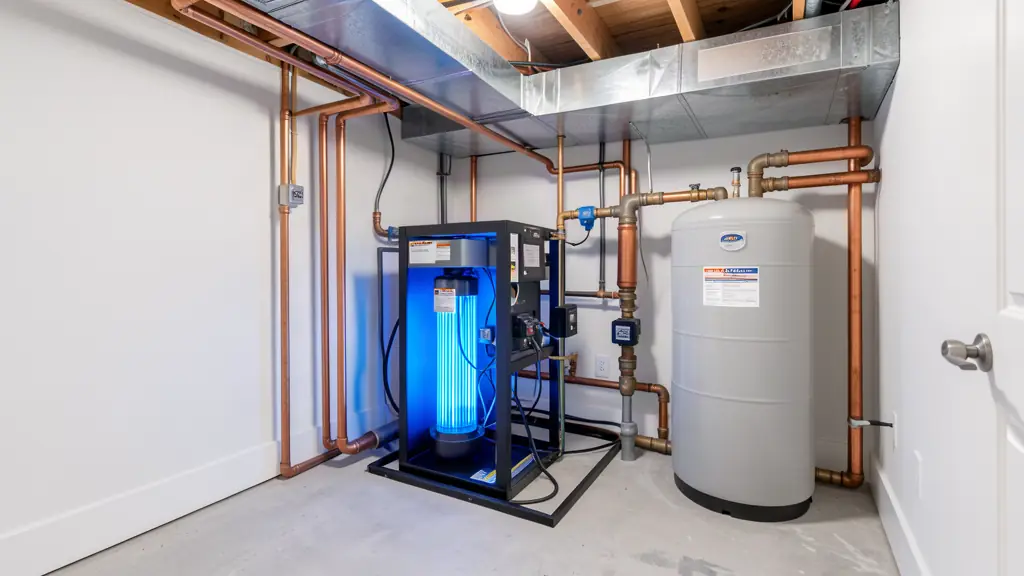
UV (ultraviolet) disinfection is the most popular well water bacteria treatment method for residential use in South Carolina. A UV system passes water through a chamber containing a UV-C lamp that emits 254-nanometer wavelength light, which damages the DNA of bacteria, viruses, and protozoa, preventing them from reproducing.
UV systems are ideal for homeowners in Orangeburg, Elloree, and Cope who have clear well water with confirmed coliform bacteria. The system treats water at the point of entry, so every tap in the house receives disinfected water. Installation typically takes one day, and the system requires only annual lamp replacement and periodic quartz sleeve cleaning.
Chlorination involves injecting a chlorine solution (usually sodium hypochlorite or calcium hypochlorite) into the well water to kill bacteria. Unlike UV, chlorine provides residual disinfection - meaning it continues to kill bacteria as water travels through your plumbing system. Chlorination is particularly effective for iron bacteria, which can be resistant to UV treatment.
For homeowners in Bamberg, Denmark, and Branchville who have severe bacterial contamination or iron bacteria, well shock chlorination followed by a continuous chlorination system is often the most effective approach.
Ozone (O3) is a powerful oxidizer that kills bacteria, viruses, and cysts faster than chlorine and without chemical byproducts. An ozone generator creates ozone gas from oxygen in the air and injects it into the water, where it oxidizes bacteria and then reverts back to oxygen within minutes.
| Feature | UV Disinfection | Chlorination | Ozone Treatment |
|---|---|---|---|
| Kill Rate | 99.99% | 99.9% | 99.99% |
| Equipment Cost | $800-$2,500 | $600-$2,000 | $2,500-$5,000 |
| Annual Maintenance | $80-$150 | $200-$400 | $150-$300 |
| Residual Protection | No | Yes | No |
| Chemicals Needed | No | Yes (chlorine) | No |
| Pre-Filtration Required | Yes | No | Yes |
| Iron Bacteria Effective | Limited | Yes | Yes |
| Best For | Clear water, coliform | Severe contamination, iron bacteria | High flow, multi-contaminant |
Yes, combining UV and chlorination is a proven approach for well water with persistent bacterial issues. The process works like this: first, shock chlorinate the well to eliminate the immediate bacteria problem. Then, install a UV disinfection system for ongoing protection. The UV system prevents recontamination without adding chemicals to your daily water supply, while the initial shock treatment ensures the well and plumbing are bacteria-free from the start.
This combined approach is particularly effective for homeowners in Bowman and Norway where well water conditions vary seasonally. After heavy rains, a UV system provides continuous protection, while an annual shock chlorination treatment keeps the well itself clean. Dubya Water can design a combined system tailored to your specific well conditions.
The cost of well water bacteria treatment in South Carolina varies based on the method you choose and whether you need pre-filtration equipment. Here are typical installed costs:
Most homeowners in Orangeburg County spend between $1,500 and $3,000 for a complete UV-based well water bacteria treatment system, including sediment pre-filtration and professional installation. Dubya Water offers free estimates and 0% financing options.
Stop guessing about bacteria in your well water. Schedule a free on-site test and we will tell you exactly what is in your water and how to treat it.
Schedule Free Water TestNot sure what is in your water? Schedule a free on-site test today.
Book Free Test