




Well Water Bacteria Treatment: Causes, Testing & Solutions for SC Homes
Published July 2, 2026 • By Dubya Water
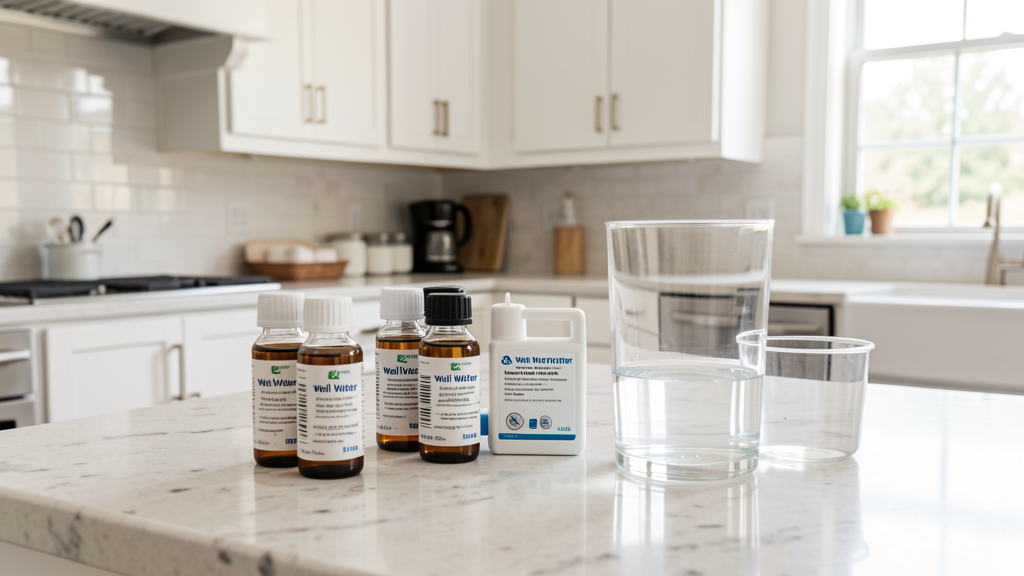
Well water bacteria treatment starts with understanding what is living in your water. Coliform bacteria, E. coli, and other microorganisms can enter private wells through surface water intrusion, damaged casings, or nearby septic systems — and they pose real health risks to your family. The good news is that bacteria in well water is almost always treatable with the right combination of testing, source correction, and disinfection.
If you rely on a private well for your home's water in Orangeburg, Rowesville, or anywhere in the South Carolina Midlands, bacteria contamination is not something to ignore. According to the CDC, approximately 23 million U.S. households use private wells, and nearly 1 in 5 tested positive for total coliform bacteria in EPA studies. In Orangeburg County — where sandy soils and a high water table create conditions for surface water to reach shallow wells — the risk is elevated after heavy spring rains and hurricane season.
This complete guide covers everything you need to know about well water bacteria treatment near me: what causes contamination, how to test properly, the best treatment systems available, and how to keep your family safe year-round.
Free Well Water Test — No Obligation
Find out if bacteria is in your well water. Same-week appointments available across Orangeburg County.
Schedule Free TestWhat Causes Bacteria in Well Water?
Bacteria enter well water through several pathways. Understanding how contamination happens is the first step toward prevention and treatment. The most common causes include:
Surface water intrusion. Heavy rainfall, flooding, or snowmelt can push surface water — carrying soil, animal waste, and organic material — down into the well. In the South Carolina Lowcountry and Midlands, where hurricanes and tropical storms bring 6–12 inches of rain in a single event, surface water intrusion is the leading cause of seasonal bacteria problems. Homes in Bowman and Branchville, with their flood-prone bottomlands, see this every storm season.
Damaged well casing or cap. Cracks in the well casing, a missing or loose well cap, or corroded seals provide a direct entry point for insects, rodents, and surface runoff. A well inspection every 2–3 years is recommended for homeowners in Orangeburg and surrounding areas.
Septic system proximity. If your well is within 50–100 feet of a septic drain field, the risk of bacterial contamination from failing septic systems increases dramatically. This is particularly relevant for properties in Elloree and Denmark, where many homes sit on small lots with shared groundwater flow patterns.
Agricultural runoff. Orangeburg County has a strong agricultural footprint, including row crops, poultry, and livestock operations. Fertilizer and animal waste can introduce coliform bacteria and nitrates into the groundwater. Homeowners in Cope and Norway with wells near farm fields should test for bacteria at least twice a year.
New well construction or repairs. Any work on your well — drilling a new well, replacing a pump, or repairing the casing — can introduce bacteria during the process. After any well work, a bacteria test is essential before drinking the water again.
What Types of Bacteria Are Found in Well Water?
Two categories matter most for private well owners:
Total coliform bacteria are a group of bacteria found naturally in soil, surface water, and organic matter. Total coliform itself is not usually harmful, but its presence indicates that surface water or organic material may be entering the well — opening the door for more dangerous contaminants. Think of total coliform as an early warning system.
Escherichia coli (E. coli) is a fecal coliform bacteria found in the intestines of humans and warm-blooded animals. Its presence means sewage or animal waste has entered the water supply. E. coli contamination requires immediate action — do not drink the water, and contact a water treatment professional right away.
Other bacteria that can appear in well water include iron bacteria (which cause orange slime, not a health risk but a nuisance), sulfate-reducing bacteria (which create hydrogen sulfide — rotten egg smell), and heterotrophic bacteria (a general indicator of bacterial growth in plumbing). If you are noticing brown well water along with bacterial concerns, the iron bacteria may be creating both the discoloration and the biological issue.
How Is Well Water Tested for Bacteria?
Testing well water for bacteria requires a certified laboratory test. Home test strips can give you a rough indication, but they miss slow-growing or low-concentration bacteria. The proper testing process includes:
1. Collect a sterile sample. A certified well water test uses a sterile container provided by the lab. The sample must be taken from a clean faucet — not a hose, not a filter, and not a faucet with an aerator. The faucet is sterilized with alcohol or a flame before collection to avoid false positives.
2. Test for total coliform and E. coli. Standard testing looks for both total coliform (the indicator) and E. coli (the health risk). The SC Department of Health and Environmental Control recommends annual testing for all private wells.
3. Interpret results. If the test shows "absent" or "negative," no coliform bacteria were detected. If "present" or "positive," bacteria was found — and the next step is to determine the source and start treatment. Free well water testing near me is available for Orangeburg County residents through Dubya Water, with on-site screening for bacteria indicators, pH, iron, sulfur, and hardness.
4. Retest after treatment. After any disinfection or treatment, the water should be retested to confirm the bacteria has been eliminated. Annual retesting after that keeps your family protected.
Well Water Bacteria Testing Quick Guide
| Test Type | What It Detects | Frequency |
|---|---|---|
| Total Coliform | Surface water intrusion indicator | Annually |
| E. coli | Fecal contamination | Annually + after storms |
| Heterotrophic Plate Count | General bacterial growth in plumbing | Every 2 years |
| Iron Bacteria | Orange slime, biofouling | When symptoms appear |
What Is the Best Treatment for Bacteria in Well Water?
The best well water bacteria treatment for your home depends on the type of bacteria, the severity of contamination, and whether the problem is ongoing or a one-time event. Here are the most effective solutions, from simplest to most comprehensive:
1. Shock Chlorination (Temporary Fix)
Shock chlorination involves adding a concentrated dose of household bleach directly into the well, circulating it through the plumbing, letting it sit for 12–24 hours, and then flushing the system completely. This kills bacteria inside the well and plumbing but does not provide ongoing protection. It is best used as an emergency measure or after well repairs, not as a permanent solution.
2. UV Disinfection Systems (Best for Ongoing Protection)
Ultraviolet (UV) disinfection is the gold standard for well water bacteria treatment. A UV system exposes water to UV-C light at 254 nanometers — a wavelength that destroys the DNA of bacteria, viruses, and cysts, making them unable to reproduce. UV treatment kills 99.99% of microorganisms without adding chemicals, changing the taste, or producing byproducts.
UV systems are installed at the point of entry (where water enters the home) and treat every tap. For whole house water filter for well water setups, UV is typically paired with a sediment pre-filter (to remove particles that could shield bacteria) and sometimes with a water softener if hard water is also present.
3. Chlorine Injection Systems (Best for Heavy Contamination)
For wells with recurring or severe bacterial contamination, a continuous chlorine injection system feeds a precise dose of chlorine into the water before it enters the home. Contact time in a retention tank allows the chlorine to kill bacteria, and a carbon filter removes the chlorine before the water reaches your taps. This approach is more aggressive than UV and is suitable for well water with high sediment loads or multiple contaminants.
4. Ozone Disinfection (Advanced)
Ozone systems inject ozone gas (O3) into the water as a powerful oxidizer that kills bacteria, viruses, and organic contaminants. Ozone is the strongest disinfectant available for residential water treatment, but systems are more expensive and require more maintenance than UV or chlorine.
Do I Need a UV System or a Whole-Home Filtration System?
This is a common question for homeowners searching "well water bacteria treatment near me" in the Orangeburg area. The answer depends on what else is in your water:
If your water test shows only bacteria (no iron, no hardness, no sulfur), a UV system with sediment pre-filtration is sufficient. If your water has bacteria plus iron, hard water, or sulfur, you need a multi-stage system that addresses all problems. For example, an iron removal system paired with UV gives you both stain-free water and bacteria protection. If hard water is the issue, water softening combined with UV and a sediment filter provides complete coverage.
Dubya Water offers free water testing in Rowesville, Cordova, and all surrounding communities. A technician comes to your home, tests your water at the tap, and recommends the exact system combination your water needs — no upselling, no unnecessary equipment.
Can I Get Rid of Bacteria in Well Water Without Chemicals?
Yes. UV disinfection systems treat bacteria without adding any chemicals to the water. UV light physically destroys the DNA of microorganisms, leaving the water chemistry unchanged. This is the preferred method for homeowners who want to avoid chlorine taste, chemical handling, or disinfection byproducts. UV systems are also low-maintenance — the UV lamp needs replacing once a year, and the quartz sleeve needs cleaning every 6–12 months, but there are no chemicals to buy or monitor.
How Much Does Well Water Bacteria Treatment Cost?
The cost depends on the treatment method and whether other water problems need to be addressed simultaneously. Here are typical price ranges for Orangeburg County homeowners:
Shock chlorination (DIY): $10–$30 for bleach and supplies. Shock chlorination (professional): $150–$400. UV disinfection system installed: $800–$2,500. Chlorine injection system installed: $1,200–$3,500. Complete multi-stage system (UV + sediment + softener + iron filter): $2,500–$6,000.
Dubya Water offers free on-site estimates and a 10-year warranty on all installed treatment systems. We serve Bamberg, Denmark, Branchville, and the entire Orangeburg area.
Well Water Bacteria Treatment: Step-by-Step Summary
- Test your water — Get a certified lab test for total coliform, E. coli, and a full mineral panel.
- Inspect your well — Check the casing, cap, seal, and grading around the wellhead.
- Shock chlorinate if needed — For immediate disinfection after contamination is confirmed.
- Install a UV disinfection system — For permanent, chemical-free ongoing protection.
- Add sediment pre-filtration — Remove particles that reduce UV effectiveness.
- Address other water problems — Add iron removal, water softening, or sulfur removal if your test shows these issues.
- Retest annually — Confirm treatment is working and your water stays safe.
Is Bacteria in Your Well Water? Let's Fix It.
Free water testing, expert treatment recommendations, and professional installation. Serving all of Orangeburg County.
Get Your Free Water TestFrequently Asked Questions About Well Water Bacteria Treatment
How long does UV disinfection take to treat well water?
UV disinfection is instantaneous. As water flows past the UV lamp, it is exposed to UV-C light for a fraction of a second — enough to destroy 99.99% of microorganisms. There is no holding tank, no wait time, and no change in flow rate.
Can bacteria in well water cause health problems?
Yes. E. coli and other pathogenic bacteria can cause gastrointestinal illness, nausea, cramps, and diarrhea. For infants, elderly individuals, and people with weakened immune systems, the risks are more serious. Iron bacteria and sulfate-reducing bacteria do not cause illness but create unpleasant staining, slime, and odors.
Do I need to treat well water for bacteria if I have a water softener?
Yes. A water softener removes hardness minerals (calcium and magnesium) but does not kill or remove bacteria. If your well water has both hard water and bacteria, you need a softener and a UV disinfection system. The softener is usually installed before the UV system to prevent scale buildup on the quartz sleeve.
Does reverse osmosis remove bacteria from well water?
Reverse osmosis (RO) systems can remove bacteria through their semi-permeable membrane, but they are not the ideal primary treatment. RO systems are point-of-use (under the kitchen sink), not whole-home. For complete protection, a whole-home UV system treats every tap, and an optional RO system at the kitchen sink provides an extra layer of purification for drinking water.
How often should I replace my UV lamp?
UV lamps should be replaced every 12 months, even if the light still appears to be working. After 9,000 hours of continuous use, the UV output drops below the effective disinfection level. Annual lamp replacement is the single most important maintenance step for keeping your bacteria treatment working.