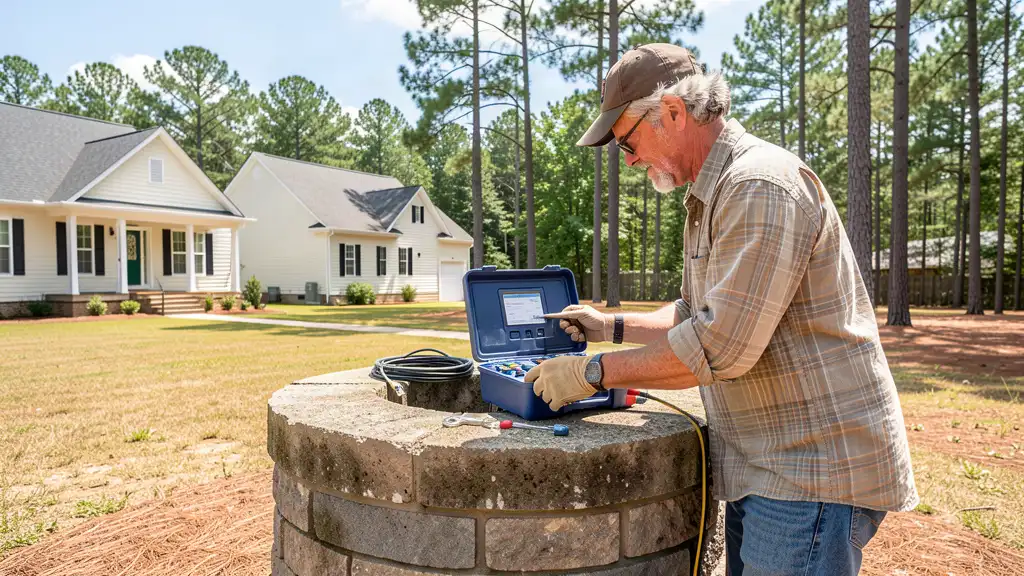
Well Water Bacteria Treatment in Orangeburg County: Complete Testing & Treatment Guide
By Dubya Water | Updated October 2026 | 10 min read
Source: Dubya Water SC
If you live in Orangeburg County and rely on a private well for your household water, bacterial contamination is a real concern. Coliform bacteria, E. coli, and iron bacteria can all find their way into groundwater supplies — especially after heavy rains, flooding, or if your well casing has aged or cracked. This guide covers everything about well water bacteria treatment in Orangeburg County, from testing to treatment options.
Need Help Now? Call Dubya Water
If your well water bacteria test came back positive, call 803-855-1055 for emergency shock chlorination, UV system installation, and water testing in Orangeburg, Rowesville, Cordova, Bowman, Elloree, Branchville, Denmark, Bamberg, Cope, and Norway.
What Causes Bacteria in Well Water in Orangeburg County?
Bacterial contamination in well water is typically caused by surface water infiltration. In Orangeburg County, the combination of heavy clay soils, seasonal flooding along the Edisto River and North Fork, and aging well infrastructure creates conditions where bacteria can enter groundwater. Common causes include:
- Floodwater intrusion — Heavy rains common in South Carolina's Midlands can flood wellheads, carrying surface bacteria into the aquifer. This is especially common in low-lying areas near the Edisto River.
- Cracked well casing — Older wells in communities like Cordova and Bowman often have casings that have deteriorated over 20-30 years, creating entry points for bacteria.
- Improper well construction — Wells without proper sanitary seals or grouting allow surface water to seep directly into the well bore.
- Septic system proximity — In rural parts of Orangeburg County, septic drain fields too close to wellheads are a common cause of coliform contamination.
- Iron bacteria — Naturally occurring bacteria that feed on iron in the water, causing reddish slime buildup in pipes, toilets, and water softeners.
What Types of Bacteria Are Found in Orangeburg County Well Water?
The most common bacterial contaminants in Orangeburg County wells include total coliform bacteria, E. coli, and iron bacteria. Total coliform is an indicator organism — if it is present, other harmful pathogens may also be in your water. E. coli indicates fecal contamination and requires immediate treatment. Iron bacteria (Crenothrix and Gallionella) create reddish-brown slime in toilets and pipes, a common complaint from homeowners in Elloree and Branchville. Each type of bacteria requires a different treatment approach, which is why proper testing is the critical first step.
How Do I Test for Bacteria in My Well Water?
Testing is the only way to know if your well water contains bacteria. Orangeburg County homeowners should test at least once per year, and more frequently if you notice changes in taste, smell, or appearance. Dubya Water offers free well water testing for Orangeburg County residents, including tests for coliform bacteria, E. coli, and iron bacteria.
To schedule your free test, call 803-855-1055 or visit our Orangeburg water treatment page. A technician will collect a sample from your kitchen tap and deliver results within 48 hours. You can also purchase a certified home test kit for initial screening, but professional laboratory testing is recommended for accurate results.
How to Treat Bacteria in Well Water — Treatment Methods Compared
There are three primary methods for treating bacterial contamination in well water. The right choice depends on your contamination level, water usage, and budget. Here is how they compare for Orangeburg County homes.
1. Shock Chlorination
Shock chlorination is the most common first step for treating bacterial contamination. It involves introducing a high concentration of chlorine (household bleach) directly into the well to kill all bacteria inside the well casing and plumbing system. The well is then flushed until the chlorine clears. This is a temporary treatment that must be repeated if contamination returns. It is effective for total coliform and E. coli but does not provide ongoing protection against recontamination. Shock chlorination costs $200-$400 for a professional service call in Orangeburg County.
2. UV Purification Systems
Ultraviolet (UV) light systems provide continuous, chemical-free water disinfection. Water passes through a chamber where UV-C light destroys 99.99% of bacteria, viruses, and protozoa. UV systems are ideal for Orangeburg County homes because they require no chemicals, have low operating costs, and work well with water softeners and iron removal systems. The main requirements are electricity (a standard outlet) and pre-filtration to remove sediment that could shield bacteria from the UV light. UV systems typically cost $800-$1,500 installed.
3. Chlorine Injection (Chemical Feed)
Chlorine injection pumps a metered amount of chlorine solution into the water line continuously. This provides ongoing disinfection and leaves a residual chlorine level that protects water as it travels through your plumbing. Chlorine injection systems are more complex and require regular maintenance but are excellent for homes with persistent bacterial issues, especially in areas like Denmark and Bamberg where seasonal flooding is common. Installation costs range from $1,200-$2,500.
What Is the Best Bacteria Treatment for Orangeburg County Wells?
For most Orangeburg County homeowners, the recommended approach is a two-step process: start with shock chlorination to eliminate existing contamination, then install a UV purification system for ongoing protection. This combination addresses both immediate and long-term bacterial risks. Homes with recurrent contamination after heavy rains may benefit from a chlorine injection system instead. If you also have hard water or iron issues — very common in Rowesville and surrounding areas — a whole-home treatment system combining a water softener with UV purification offers complete protection.
How Often Should I Test for Bacteria After Treatment?
After any bacteria treatment, test your water two weeks later to confirm the treatment was successful. Then test again at 3 months and 6 months. After that, annual testing is sufficient unless you notice changes in your water quality. Heavy rain events — common during South Carolina hurricane season (June through November) — should trigger an extra test, especially for homes in low-lying areas near the Edisto River in Cope and Norway.
Emergency Bacteria Treatment — What to Do Immediately
If your well water bacteria test comes back positive, take these steps immediately:
- Stop drinking the water — Use bottled water for drinking, cooking, and brushing teeth until the contamination is resolved
- Call Dubya Water — Dial 803-855-1055 for emergency service. We provide same-day shock chlorination across Orangeburg County
- Boil water if needed — Boiling for one full minute kills bacteria, but this is a temporary emergency measure only
- Schedule a free follow-up test — Two weeks after treatment, we will test again to confirm the water is safe
- Install a permanent UV system — Prevent future contamination with continuous UV treatment that requires no chemicals
Well Water Bacteria Treatment FAQs for Orangeburg County
How much does well water bacteria treatment cost in Orangeburg County?
Costs vary by treatment method. Shock chlorination runs $200-$400. UV system installation ranges from $800-$1,500. Chlorine injection systems cost $1,200-$2,500. Dubya Water offers free well water testing to help you determine which treatment you need before any cost is incurred.
Can I treat well water bacteria myself?
Shock chlorination can be done by a homeowner with careful instructions, but professional treatment is recommended to ensure complete disinfection and safe chemical handling. UV and chlorine injection systems require professional installation. Dubya Water serves all of Orangeburg County, including Rowesville, Cordova, Bowman, Elloree, and Branchville.
How long does shock chlorination take?
The full process takes 24-48 hours. The chlorine solution needs 12-24 hours of contact time in the well to kill all bacteria, followed by flushing (2-4 hours or more depending on your well depth and pump capacity), and then a follow-up test to confirm the water is safe.
Does UV treatment remove bacteria from well water permanently?
UV treatment kills bacteria every time water passes through the system, providing ongoing protection. As long as the UV system is properly maintained (annual bulb replacement, periodic cleaning of the quartz sleeve), it will keep your water bacteria-free. It does not leave a residual disinfectant, so the water is safe to drink immediately.
Will a water softener remove bacteria?
No, water softeners do not remove or kill bacteria. They remove calcium and magnesium (hardness minerals). Bacteria must be treated separately through shock chlorination, UV purification, or chlorine injection. A whole-home system combining a water softener with UV purification offers complete treatment for both hardness and bacteria.
Does Dubya Water service my Orangeburg County area?
Yes! Dubya Water provides well water testing, bacteria treatment, and whole-home water treatment solutions throughout Orangeburg County and the surrounding Midlands. We serve Orangeburg, Rowesville, Cordova, Bowman, Elloree, Branchville, Denmark, Bamberg, Cope, and Norway. Call 803-855-1055 or visit our homepage to schedule your free water test today.