Reverse Osmosis vs Water Softener: What Is the Difference?
Updated June 27, 2026 | 10 min read
The short answer: a water softener removes calcium and magnesium (hardness minerals) from all the water entering your home using ion exchange, while reverse osmosis removes dissolved contaminants like nitrates, arsenic, heavy metals, and TDS from drinking water at a single tap using a semipermeable membrane. They are not interchangeable — they solve different problems. Many South Carolina well water homes need both systems working together for complete water treatment.
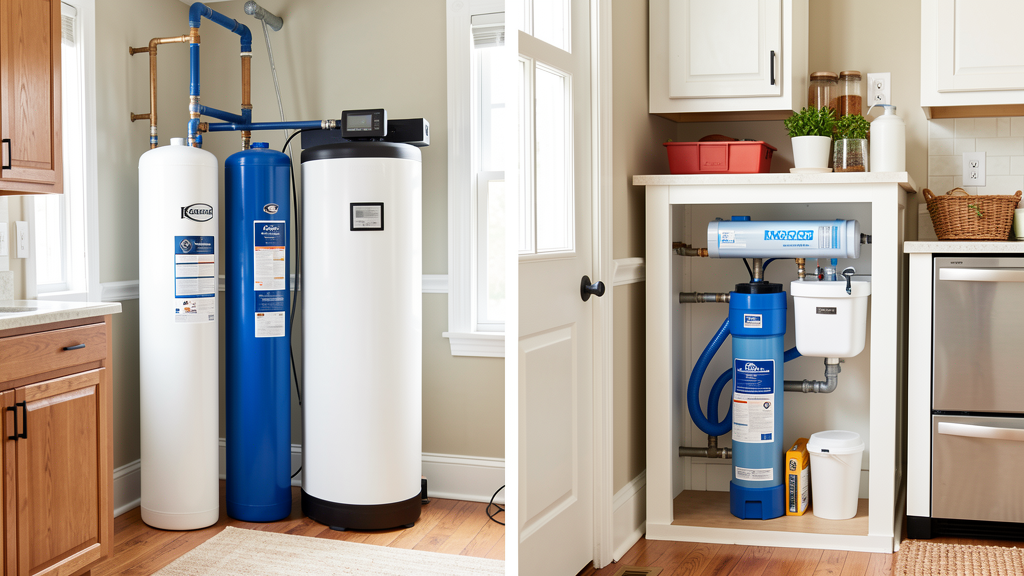
Reverse Osmosis vs Water Softener Comparison Table
| Feature | Water Softener | Reverse Osmosis (RO) |
|---|---|---|
| What It Removes | Calcium, magnesium (hardness minerals); some iron (up to ~3 ppm) | Nitrates, arsenic, lead, fluoride, chlorine, TDS, PFAS, bacteria/viruses (with proper membrane) |
| What It Does NOT Remove | Does NOT remove contaminants, TDS, bacteria, or improve taste | Does NOT remove hardness minerals effectively without pre-softening |
| Coverage | Whole house — every tap, shower, appliance | Single tap (under-sink) or whole house (expensive) |
| Cost Range | $1,500–$3,500 installed | $300–$800 (under-sink); $3,000–$8,000+ (whole house) |
| Maintenance | Add salt every 4–8 weeks; resin lasts 10–15 years | Replace pre-filters every 6–12 months; membrane every 2–5 years |
| Water Waste | Minimal — uses ~40–60 gallons per regeneration (once a week) | 3–4 gallons wasted per gallon of purified water (under-sink); high for whole-house |
| Flow Rate | Full household flow — no impact on water pressure | Slow — ~0.5–1 gallon per hour (under-sink); storage tank needed |
| Best Use Case | Hard water with scale, dry skin, soap scum, spotting | Contaminated or bad-tasting well water; bottled-water-quality drinking water |
What a Water Softener Does
A water softener targets hardness minerals — calcium and magnesium. It uses ion exchange technology: resin beads in the tank swap sodium or potassium ions for the calcium and magnesium ions flowing through. The result is soft water that:
- Prevents white scale buildup on faucets and fixtures
- Extends water heater life by 25–40%
- Makes soap lather better and rinse cleaner
- Leaves skin and hair feeling softer
- Eliminates spots on dishes and glassware
If your well water is hard, a whole-house water softener in Orangeburg, SC is the standard fix. A softener treats all the water entering your home — every tap, shower, toilet, and appliance — for a typical installed cost of $1,500 to $3,500.
What Reverse Osmosis (RO) Does
Reverse osmosis uses a semipermeable membrane to remove dissolved contaminants — things ion exchange does not touch. A typical RO system removes 90–99% of:
- Nitrates and nitrites
- Arsenic and heavy metals
- Fluoride and chlorine
- Total dissolved solids (TDS)
- Bacteria and viruses (with proper membrane and UV)
- PFAS and other emerging contaminants
An under-sink RO system costs $300 to $800 installed. A whole-house RO system runs $3,000 to $8,000+. RO is slow — it produces about a gallon per hour for under-sink units. It is designed for drinking water at a single tap, not the whole house.
For homes with high iron levels, iron removal treatment is often needed before the softener or RO to protect both systems.
The Critical Difference Between RO and Water Softener
Here is where most homeowners get confused when comparing reverse osmosis vs water softener:
- Water softener = treats all water in the house, but only removes hardness minerals. Does not remove contaminants.
- Reverse osmosis = removes contaminants, but only at one tap. Does not fix hard water.
Think of a water softener as your whole-house protection system. RO is your final polishing step for drinking and cooking water.
When You Need Both
For most South Carolina well water, the answer to "which is better RO or water softener" is both systems working together. Here is why:
- RO membranes are fragile. Hard water destroys them fast. Calcium and magnesium scale clog the membrane pores, cutting flow and eventually ruining the system. A water softener feeding softened water to the RO extends membrane life from months to years.
- SC well water has multiple problems. The Coastal Plain aquifer produces water with high hardness (10–25 gpg), iron (1–10 ppm), and often sulfur or other contaminants. A softener handles hardness and iron; RO handles the rest.
- It is the gold standard. A softener + RO combination is what most water treatment professionals recommend for comprehensive well water treatment. It covers every water quality concern your home has.
Which One Do You Need? Decision Guide
Choose a water softener if...
- You see white scale on faucets, shower heads, and glass shower doors
- Soap does not lather well and leaves scum in tubs and sinks
- Your skin feels dry and itchy after showering
- Dishes and glassware come out spotted from the dishwasher
- Laundry feels stiff and colors fade quickly
- Your water heater needs frequent maintenance or fails early
- You have well water hardness above 7 grains per gallon (most SC wells)
Choose reverse osmosis if...
- Your drinking water has an unpleasant taste or odor
- Nitrates, arsenic, or lead showed up in your well water test
- Total dissolved solids (TDS) measure above 500 ppm
- You want bottled-water quality from your tap without buying bottles
- PFAS or other emerging contaminants are a concern in your area
- You are on a private well and want maximum contaminant removal
Choose both if...
- You have hard water and want pure drinking water (most common scenario)
- Your well water test shows both high hardness and elevated contaminants
- You want the absolute best water quality for your family
- You live in the SC Midlands or Lowcountry on well water
Cost Breakdown: Reverse Osmosis vs Water Softener
| System | Typical Cost | Covers |
|---|---|---|
| Water Softener | $1,500–$3,500 | Whole house |
| Under-sink RO | $300–$800 | Single tap |
| Whole-house RO | $3,000–$8,000 | Whole house |
| Softener + RO combo | $2,000–$4,500 | Whole house + drinking |
Signs You Need a Water Softener
- White scale on faucets and fixtures
- Soap does not lather well
- Dry, itchy skin after showering
- Spots on dishes and glassware
- Laundry feels stiff and fades quickly
- Water heater needs frequent maintenance
Signs You Need Reverse Osmosis
- Unpleasant taste or odor in drinking water
- Nitrates detected in well water test
- Known contamination issues in your area
- You want bottled-water quality from your tap
- Total dissolved solids above 500 ppm
South Carolina Specifics
South Carolina's Coastal Plain aquifer — which supplies well water across Orangeburg, Lexington, Richland, Calhoun, and Bamberg counties — is naturally hard and often contains iron, sulfur, and bacterial concerns. Most wells in our service area test between 10 and 25 grains per gallon hardness. Many also show iron levels of 1 to 8 ppm and occasional hydrogen sulfide (that rotten egg smell).
That combination means most SC well water needs a water softener as the first line of defense and RO for the drinking water quality homeowners expect.
What Dubya Water Recommends
Here is our standard recommendation based on thousands of SC well water tests:
- Start with a free water test. We test hardness, iron, pH, sulfur, TDS, manganese, and bacteria. This tells us exactly what you are dealing with.
- Install a water softener sized for your household and water conditions. This handles hardness and protects everything downstream.
- Add RO at the kitchen sink for pure drinking and cooking water. Fed by softened water, the RO membrane lasts years longer.
- Add specialty filters as needed — iron filter if iron exceeds 3 ppm, sulfur filter if H2S is present, UV if bacterial concerns exist.
Still Asking "Reverse Osmosis vs Water Softener — Which Do I Need?"
The answer depends on what is in your water. A free in-home water test tells you exactly what problems you have — hardness, iron, TDS, pH, sulfur, and more. No guesswork, no obligation.
Schedule Free Water Test Water Softener Services