




Water Softener Troubleshooting: 7 Common Fixes & Solutions
Published August 13, 2026 • By Dubya Water
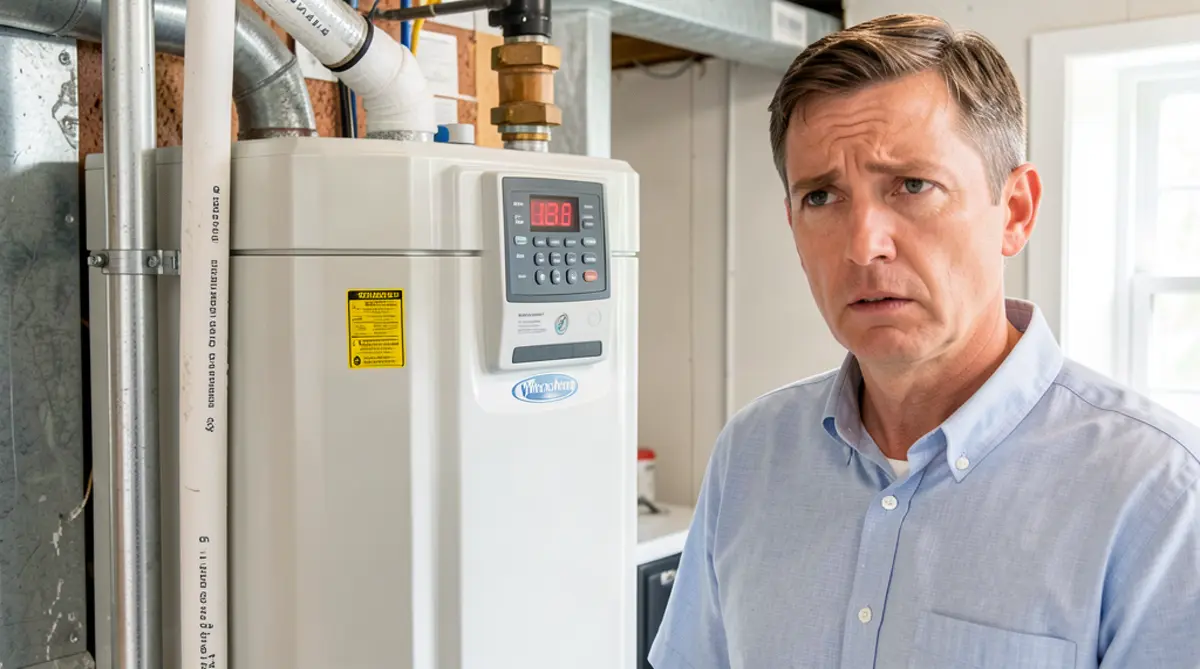
Your water softener stops working for one of seven reasons: no salt, a salt bridge, clogged resin, a stuck valve, a failed motor, a brine tank leak, or a power failure. Most of these you can fix yourself in under 30 minutes — no service call needed. This guide walks through every common water softener problem, how to diagnose it, and exactly what to do to get soft water flowing again.
If your water softener in Orangeburg or Rowesville stopped making your water feel soft, do not panic — most water softener problems have simple DIY fixes. Whether you searched for "water softener not working" or "water softener not using salt near me", this troubleshooting guide covers the seven most common issues, how to identify them, and how to fix them without a service call. If these steps do not resolve the problem, call Dubya Water at (803) 855-1055 for free over-the-phone diagnostics.
Need Help Diagnosing Your Water Softener?
Call us for free phone troubleshooting. We can walk you through the fix step by step.
Call (803) 855-10551. Water Softener Not Using Salt (Salt Bridge or Brine Issue)
This is the most common water softener problem. Your softener has salt in the tank but is not consuming it — your water slowly becomes hard again over several days. The cause is almost always a salt bridge, a hard crust that forms between the salt and the water in the brine tank, preventing salt from dissolving into the brine solution.
How to check: Open the brine tank lid. Look at the salt level. If the salt seems high but there is water underneath, gently push a broom handle straight down into the salt. If you hit a hard crust before reaching the bottom, you have a salt bridge.
How to fix: Take a broom handle (not a sharp tool) and poke it into the salt in several places around the tank until you hear the crust break and feel the salt fall loose. Push the handle all the way to the bottom to make sure the bridge is fully broken. After breaking the bridge, the softener will resume normal salt consumption on its next regeneration cycle. If no bridge is present, check the brine line for kinks and ensure the brine float moves freely.
2. Water Still Hard After Regeneration
Your softener runs through its regeneration cycle but your water still feels hard. This usually means one of three things: the bypass valve is open, the resin bed is exhausted, or the regeneration cycle is not completing properly.
Check the bypass valve first. Locate the bypass valve on the softener valve head. It should be in the "service" or "normal" position — not "bypass." If someone accidentally left it in bypass after maintenance, simply turn it back to service mode and run a manual regeneration.
Test your water hardness. Use a home test strip on a faucet before the softener and after the softener. If both readings are the same, the bypass is open or the valve is not switching properly. If the after reading is lower but still above zero, the resin may be exhausted (softeners typically need resin replacement every 10 to 15 years). In Bowman and Bamberg, many homes have well water with high iron that can foul the resin — iron in the water coats the resin beads and prevents them from exchanging sodium. If your resin is fouled, a resin cleaner may restore it; otherwise, the resin bed must be replaced.
3. Water Softener Leaking From Brine Tank
Water pooling around the brine tank or underneath the softener indicates a leak. Common causes include a cracked brine tank, loose brine line connections, or a float valve stuck in the open position causing the tank to overflow.
How to fix: Unplug the softener first. Check all brine line connections where the tubing connects to the float assembly and the valve head — tighten any loose fittings. If the float valve is stuck, clean off any salt debris and ensure it moves freely. If the brine tank itself is cracked, it must be replaced. Temporary fix: transfer the salt to a dry container and let the tank dry out, then apply a food-grade epoxy patch. However, replacement is the permanent solution.
4. Water Softener Error Codes on Display
Modern water softeners display error codes when something goes wrong. While codes vary by brand (Fleck, Clack, GE, Whirlpool, Morton), here are the common ones:
- Err1 or Err2: Motor or valve failure. The valve cannot turn to the correct position. Check for debris blocking the valve. Reset the unit.
- Err3 or Err4: Sensor issue or loss of time. The control board lost power or a sensor is reading incorrectly. Reset the clock and time of day.
- Err5 or Err6: Internal electronic failure. The control board may need replacement.
- no salt or SALT: The sensor detects low salt. Add salt to the brine tank.
- FILL: The softener is trying to fill the brine tank and not finishing. Check the brine line and injector.
First step for any error code: Unplug the softener for 30 seconds, plug it back in, and see if the code clears. Many error codes are triggered by temporary power fluctuations. If the code returns, call (803) 855-1055 — Dubya Water can diagnose any error code over the phone for Rowesville, Elloree, and Branchville homeowners.
5. Water Softener Not Regenerating
If your water softener is not running its regeneration cycle at the scheduled time, your water will gradually become hard. Common causes: power interruption reset the timer, the timer is set to the wrong time of day, or the regeneration motor failed.
How to fix: Verify the time on the display is correct. If the clock is wrong (e.g., showing 2:00 PM when it is 2:00 AM), the regeneration happened at the wrong time and you may have soft water only part of the day. Reset the clock and initiate a manual regeneration to confirm the system works. Listen for the motor during regeneration — if the display counts down but the motor is silent, the motor has failed and needs replacement. In Cordova and Cope, power outages from thunderstorms are the most common cause of timer resets.
6. Water Softener Making Noise During Regeneration
Some noise during regeneration is normal — water flowing through the softener cycles makes a whooshing or draining sound. But loud grinding, clicking, or squealing indicates a problem.
Grinding sound: The valve motor gear may be stripped or the piston may be jammed by debris. Turn off the water and disassemble the valve head to check for obstructions.
Clicking that does not stop: The cam or gear that positions the valve may be broken. The valve head assembly may need replacement.
Continuous draining sound: The softener may be stuck in a cycle. Unplug the unit for 30 seconds. If the draining continues when power is restored, the valve piston is stuck and needs professional service.
7. Water Softener Not Using Salt (Low Salt Consumption)
If your water softener is using very little salt even though your water is hard, the issue may be a clogged injector, a restricted brine line, or incorrect salt level settings. The injector (a small venturi device) draws brine from the tank into the resin tank. If it is clogged with salt debris or sediment, brine flow is reduced.
How to fix: Remove and clean the injector screen and nozzle. Soak them in warm water to dissolve salt deposits. Check the brine line for kinks or obstructions. Also verify that the salt dose setting matches your water hardness — if the softener was set for moderately hard water when you actually have very hard water (common in Denmark and Norway), it will under-dose salt.
Water Softener Not Working? We Can Help
Free phone diagnostics for Orangeburg County homeowners. Most problems fixed same-day.
Call (803) 855-1055Water Softener Troubleshooting Quick Reference
Quick Reference Table
| Symptom | Likely Cause | DIY Fix |
|---|---|---|
| Not using salt | Salt bridge | Break bridge with broom handle |
| Water still hard | Bypass open or resin exhausted | Close bypass valve or replace resin |
| Leaking brine tank | Loose fitting or cracked tank | Tighten fitting; replace tank if cracked |
| Error code on display | Power surge or motor issue | Reset unit; call for error codes that return |
| Not regenerating | Timer reset or motor failed | Reset clock; replace motor if silent |
| Loud noise during regen | Jammed piston or stripped gear | Check valve for debris; replace gear |
| Low salt consumption | Clogged injector | Clean injector screen and nozzle |
When to Call a Professional
You can fix most water softener problems yourself with basic tools and 20 to 30 minutes. Call Dubya Water if:
- The error code returns after resetting the unit
- You suspect a cracked brine tank or valve head
- The motor is silent during regeneration
- Water is leaking from the valve head (not the brine tank connections)
- Your softener is more than 12 years old and water is still hard
Dubya Water serves Orangeburg, Rowesville, Cordova, Bowman, Bamberg, Elloree, Branchville, Denmark, Cope, and Norway. Call (803) 855-1055 for free phone diagnostics — we will tell you over the phone whether the fix is DIY or needs a service visit.