Water Softener Not Working? 7 Common Problems and How to Fix Them
Published July 10, 2026 • By Dubya Water • Jump to FAQ
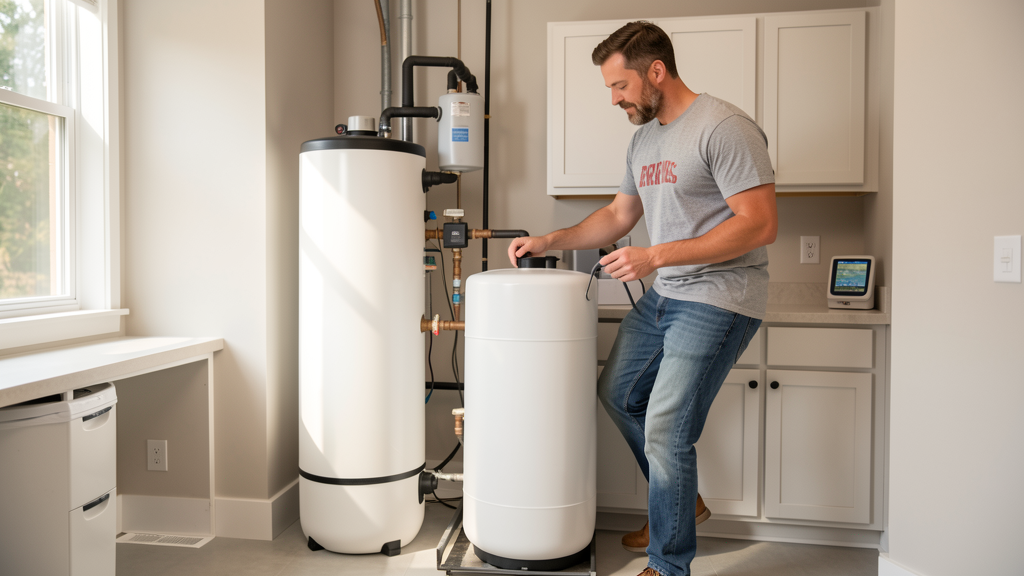
Is your water softener not producing soft water? The problem is often one of seven common issues: a salt bridge, clogged resin bed, motor failure, broken bypass valve, salt mushing, drain line restriction, or a control valve error code. Most of these are fixable in under 30 minutes without a service call. Below is the step-by-step troubleshooting guide for every common water softener failure, written for South Carolina well water conditions.
What Causes a Water Softener to Stop Working?
Water softeners are durable machines — most last 10 to 15 years — but they have several common failure points. In South Carolina, where well water can be high in iron, manganese, and hardness minerals (7 to 15+ grains per gallon in the Orangeburg area), softeners work harder and develop problems sooner than in areas with softer municipal water.
If your water suddenly feels hard again — soap doesn't lather, spots appear on dishes, or your skin feels dry — your softener is telling you something is wrong. Here are the 7 most common causes and exactly how to fix each one.
1. Salt Bridge — The Most Common Culprit
A salt bridge is a hard crust that forms between the salt pellets and the water below, creating an air gap. The softener can't dissolve salt into brine, so it stops regenerating. Your water slowly goes back to being hard over a few days.
How to check: Open the salt lid and push a broom handle straight down. If it hits a hard crust an inch or two down, you have a salt bridge. If it goes all the way to the bottom through loose salt, no bridge.
How to fix: Break the bridge with the broom handle. Break it into fist-sized pieces and push them down into the water below. Never use a sharp tool that could puncture the brine tank floor. Once broken, run a manual regeneration cycle.
Prevention: Use high-purity solar salt or evaporated salt pellets. Avoid rock salt, which has insoluble impurities that accelerate bridging. In humid South Carolina climates, keep the salt level below the halfway mark to reduce moisture-related bridging.
2. Resin Bed Fouling (Iron & Manganese)
The resin beads inside your softener attract hardness minerals (calcium and magnesium) and swap them for sodium. But if your well water has high iron — common in Orangeburg, Rowesville, and Elloree wells — the iron coats the resin beads and prevents them from grabbing hard water minerals.
Signs: Water tastes metallic, reddish stains on fixtures, softener runs through salt faster than normal, and water still feels hard after regeneration.
How to fix: Use a resin cleaner (iron-cleaning additive) available at most hardware stores. Add it to the brine well and run a manual regeneration. For severe fouling, call Dubya Water at (803) 855-1055 for a professional resin cleaning or replacement.
Prevention: If your well water tests at 2+ ppm iron, install a dedicated iron filter before the water softener. Dubya Water's iron removal systems protect softener resin and extend its life by years. This is especially important for homes in Bamberg, Denmark, and Branchville, where iron levels in well water often exceed 3 ppm.
3. Motor or Control Board Failure
If your softener makes no noise during regeneration (the normal cycle sounds like running water plus a faint motor hum), the motor or control board may have failed. This is most common on units over 8 years old.
How to check: Listen during a manual regeneration cycle. No motor sound at all points to an electrical issue — blown fuse, tripped breaker, or failed transformer. A humming motor that doesn't turn means the motor bearings are seized.
How to fix: Check the outlet the softener is plugged into — test with a known-working device. Check the softener's fuse (typically a 3-amp fuse on the control board). If the motor hums but doesn't turn, it needs replacement. Most residential softener motors cost $50 to $150 and are DIY-replaceable with a screwdriver.
4. Bypass Valve Left Open
This is the number-one "problem" that isn't actually a problem — someone accidentally turns the bypass valve during installation, maintenance, or cleaning, and the softener is literally bypassed. Water flows through without being softened.
How to check: Look at the bypass valve (usually a black or red lever located on the back or side of the control head). If it's in the "bypass" position, turn it to "service" or "normal." Most bypass valves have an arrow showing flow direction.
How to fix: Simply turn the valve to the service position. Wait 10 minutes for the softener to begin producing softened water again.
5. Salt Mushing (Salt Quality Problem)
Salt mushing happens when low-quality salt dissolves into a sludge at the bottom of the brine tank instead of forming clean brine. The sludge blocks the brine draw tube, preventing the softener from pulling brine into the resin tank during regeneration.
How to check: If you see a thick, grayish sludge at the bottom of the brine tank when probing with a broom handle, you have salt mushing.
How to fix: Scoop out all the mushy salt sludge with a plastic cup or small bucket. Wash the brine tank interior with a mild soap solution and rinse thoroughly. Refill with high-purity evaporated salt pellets only.
Prevention: Use evaporated salt pellets (not rock salt or solar salt). Clean the brine tank annually. Homes in Cope and Norway with seasonal humidity changes should check the brine tank quarterly.
6. Drain Line Restriction
The softener's drain line carries away brine and flushed minerals during regeneration. If the drain line is kinked, clogged, or frozen, the regeneration cycle fails and the softener can't clean itself.
How to check: During regeneration, check that water is flowing through the drain line (usually a 1/2-inch tube running from the softener to a floor drain, standpipe, or laundry sink). No flow means a restriction.
How to fix: Straighten any kinks. Disconnect the drain line and flush it with a garden hose to clear debris. If the line runs to a standpipe, check for standing water in the drain — a blocked standpipe prevents proper flow. For outdoor drain lines in colder months, ensure the line isn't frozen.
7. Error Codes on Digital Display
Modern water softeners display error codes when something goes wrong. Common codes and their meanings:
- Err 1 / CODE 01: Motor position error — motor stalled or jammed. Check for debris in the valve.
- Err 2 / CODE 02: Valve position error — the internal valve didn't rotate fully. Run a manual regeneration cycle.
- Err 3 / CODE 03: Time-of-day power loss — the clock reset after a power outage. Just reset the time; not a real problem.
- CODE 04: Regeneration cycle time exceeded. Look for drain line restrictions or valve blockages.
- CHECK SALT / ADD SALT: The salt level sensor detected low salt. Refill the brine tank.
Your softener's manual has the full error code table. Most codes are fixable from the control panel without tools.
When to Call a Professional
Some problems need a service technician. Call (803) 855-1055 if:
- You've tried all 7 fixes above and water is still hard
- Your softener is leaking water from the valve or tank
- The error code doesn't match anything in your manual
- Your water tests high for iron AND hardness together
- The softener is over 12 years old — it may need full replacement
Dubya Water serves all of the SC Midlands, including Orangeburg, Rowesville, Cordova, Bowman, Elloree, Branchville, Denmark, Bamberg, Cope, and Norway. Our technicians carry all common replacement parts — valves, motors, resin, and control boards — so most repairs are same-day.
Frequently Asked Questions
Why is my water softener not using salt?
A salt bridge is the most likely cause — salt crusted above the water level creates an air gap. Break the bridge with a broom handle and run a manual regeneration. Salt mushing (sludge at the bottom of the brine tank) can also prevent salt from dissolving. Clean out the sludge and refill with high-purity pellets.
Why is my water hard again after the softener?
Check the bypass valve first — it may have been accidentally turned to bypass mode. If the valve is correct, inspect for a salt bridge, resin fouling (common with iron-heavy well water in the Orangeburg area), or a failed control board motor. A free water test from Dubya Water can confirm whether the softener is still functioning.
How often should a water softener regenerate?
Most SC homes with well water need regeneration every 3 to 7 days, depending on water hardness and household size. A family of 4 with 10 gpg hardness typically regenerates every 4 to 5 days. Your softener's control valve can be set to regenerate based on gallons used or days since last cycle.
Can high iron damage my water softener?
Yes. Iron above 2 ppm coats the resin beads and reduces softening capacity. In severe cases, the resin must be chemically cleaned or replaced. Installing a pre-softener iron filter protects your softener investment. This is especially important for well water in Bamberg, Branchville, and Denmark counties where iron levels frequently exceed 3 ppm.
How long do water softeners last?
10 to 15 years with proper maintenance. Annual brine tank cleaning, using high-purity salt, and installing a pre-filter for sediment and iron all extend lifespan. After 12 years, replacement is often more cost-effective than major repairs.
Does Dubya Water repair water softeners in Orangeburg SC?
Yes. Dubya Water provides same-day service for water softener repair across the SC Midlands, including Orangeburg, Rowesville, Cordova, Bowman, Elloree, Branchville, Denmark, Bamberg, Cope, and Norway. Call (803) 855-1055 to schedule a service visit.