Is There Chlorine in Tap Water? What Homeowners Need to Know
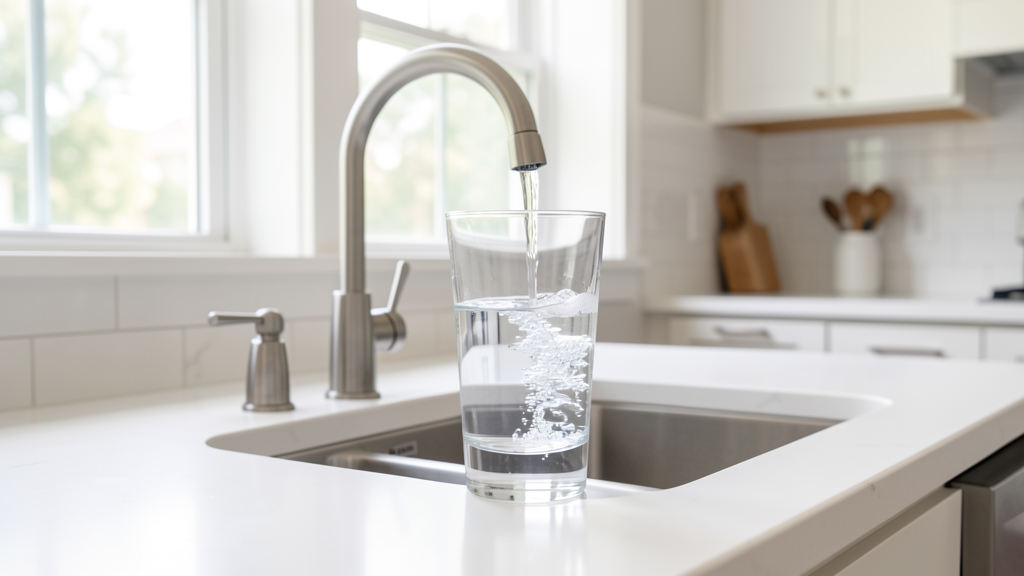
Yes — most tap water in the United States contains chlorine. Municipal water treatment facilities add chlorine as a disinfectant to kill bacteria, viruses, and other microorganisms that could cause waterborne diseases. The U.S. Environmental Protection Agency (EPA) allows chlorine levels up to 4 parts per million (ppm) in drinking water, which is well below the threshold that would cause health concerns for most people. While chlorine is essential for public health, many homeowners find the taste and smell unpleasant and choose filtration systems to remove it.
If you receive your water from a municipal supply in South Carolina — whether in Orangeburg, Columbia, Lexington, Sumter, or any other city — your water almost certainly contains chlorine. This article explains why chlorine is added, what levels are considered safe, how it affects your water, and what you can do if you do not like the taste or smell.
Why Is Chlorine Added to Tap Water?
Chlorine is added to tap water as a disinfectant to protect public health. Water treatment facilities have used chlorine since the early 1900s to kill or inactivate harmful bacteria, viruses, and parasites that can cause diseases such as cholera, typhoid fever, dysentery, and giardiasis. The Centers for Disease Control and Prevention (CDC) considers chlorination one of the most significant public health advances in history, responsible for dramatically reducing waterborne disease outbreaks in the United States.
Chlorine works by penetrating the cell walls of microorganisms and disrupting their metabolic processes. It remains active in the water as it travels through pipes to your home, providing ongoing protection against contamination that could occur anywhere in the distribution system. This residual effect is why you may still detect chlorine at your tap even though it was added miles away at the treatment plant.
How Much Chlorine Is in Tap Water?
The EPA regulates chlorine levels in drinking water under the Safe Drinking Water Act. The maximum residual disinfectant level (MRDL) for chlorine in drinking water is 4.0 milligrams per liter (mg/L), which is equivalent to 4 parts per million (ppm). This is the legal upper limit, but actual levels are typically much lower.
Most municipal water systems in South Carolina maintain chlorine levels between 0.5 and 2.0 ppm at the treatment plant. By the time water reaches your tap, levels are usually between 0.2 and 1.0 ppm, depending on how far your home is from the treatment facility and the condition of the distribution pipes. You may notice a stronger chlorine taste or smell at certain times of year — water utilities sometimes increase chlorine levels during warm months when bacterial growth is more active.
To put these numbers in perspective: 4 ppm is equivalent to about four drops of chlorine in a 10-gallon tank of water. At typical levels of 0.5-1.0 ppm, you would need to drink thousands of glasses of tap water daily to approach any level of concern.
Is Chlorine in Tap Water Safe to Drink?
Yes, chlorine in tap water at regulated levels is safe for most people to drink. The EPA and World Health Organization have thoroughly studied the health effects of chlorinated drinking water and concluded that the benefits of disinfection far outweigh any potential risks. The levels found in municipal water supplies are carefully monitored and controlled to ensure public safety.
However, some people are more sensitive to chlorine than others. Individuals with asthma or other respiratory conditions may notice irritation from chlorine vapors during showers. People undergoing kidney dialysis need specially treated water because dialysis directly exposes blood to water. And some studies have suggested a possible link between long-term consumption of chlorinated water and certain health effects, though the evidence is not conclusive and the EPA maintains that current safety margins are adequate.
If you are concerned about chlorine in your drinking water, the most effective solution is point-of-use filtration. A reverse osmosis system removes up to 99% of chlorine and chloramine, along with many other contaminants, providing you with clean, great-tasting water at your kitchen sink.
Does Boiling Water Remove Chlorine?
Yes, boiling water for 15-20 minutes will remove most of the chlorine through evaporation. Chlorine is a volatile chemical that dissipates into the air as the water heats. However, this method has several drawbacks: it is slow, uses energy, only treats small batches, and does not remove chloramine (a chlorine-ammonia compound that some water systems use instead of free chlorine). Chloramine requires much longer boiling times or specialized filtration to remove.
For most homeowners, a more practical solution is carbon filtration. Activated carbon filters, including those found in refrigerator pitchers, faucet-mounted filters, and reverse osmosis systems, effectively remove chlorine and improve taste without the inconvenience of boiling.
How to Tell If Your Water Has Chlorine
The most obvious sign of chlorine in tap water is the taste or smell. Chlorinated water has a distinct swimming-pool-like odor and a slightly chemical taste. You may notice it more strongly in hot water because heat accelerates the release of chlorine gas from the water.
If you are unsure, you can purchase a simple chlorine test kit from a hardware store or online retailer. These test strips change color based on the chlorine level in your water, giving you a rough measurement. For a more comprehensive analysis, professional water testing services can measure chlorine levels along with dozens of other water quality parameters.
Does Chlorine Affect Health Over Time?
The EPA has established a maximum contaminant level goal (MCLG) of 4 mg/L for chlorine, meaning there is no known or anticipated health effect at or below this level over a lifetime of exposure. The CDC and World Health Organization agree that chlorinated drinking water at regulated levels poses no significant health risk.
Some research has examined potential byproducts of chlorination called trihalomethanes (THMs), which can form when chlorine reacts with organic matter in water. The EPA regulates THMs separately with a maximum allowable level of 80 parts per billion. Water utilities monitor THM levels and adjust treatment processes to keep them within safe limits. Most municipal water systems in South Carolina regularly test and report THM levels in their annual water quality reports.
Should Well Owners Worry About Chlorine?
If your home uses a private well, your water does not contain chlorine unless you add it yourself. Well water comes directly from the ground and is not treated by a municipal system. This does not mean well water is automatically safer — it can contain bacteria, nitrates, iron, sulfur, and other contaminants depending on your local geology and well conditions.
Well owners concerned about bacterial contamination have several options. UV disinfection systems kill bacteria and viruses without adding chemicals to your water. Some well owners choose to shock-chlorinate their well periodically to eliminate bacterial growth, followed by filtration to remove the chlorine before it reaches the tap.
If you rely on well water and want to ensure your family is drinking safe, clean water, start with a free water test from Dubya Water. We test for bacteria, iron, hardness, pH, and other parameters specific to South Carolina wells.
Best Filtration Options for Removing Chlorine
If you do not like the taste or smell of chlorine in your tap water, several filtration options can effectively remove it:
- Activated Carbon Filters — The most common and affordable option. Pitcher filters, faucet-mounted filters, and under-sink carbon filters all effectively remove chlorine and improve taste.
- Reverse Osmosis Systems — The most thorough option. RO systems remove up to 99% of chlorine, chloramine, and hundreds of other contaminants. They provide bottled-water-quality drinking water at your kitchen sink.
- Whole-Home Carbon Filtration — For homeowners who want chlorine-free water throughout the house, whole-home carbon filters treat all water entering your home, including shower and bath water.
- Point-of-Entry Filtration — Installed where the main water line enters your home, these systems remove chlorine and sediment before water reaches any tap.
What About Chloramine?
Some water utilities use chloramine (chlorine combined with ammonia) instead of free chlorine as a disinfectant. Chloramine stays active in the distribution system longer and produces fewer disinfection byproducts. However, it is more difficult to remove. Standard carbon filters still work but less efficiently than for free chlorine. A catalytic carbon filter or reverse osmosis system provides the best chloramine removal.
Does Chlorine Affect Your Skin and Hair?
Chlorine can dry out your skin and hair, especially with frequent showering in chlorinated water. It strips natural oils, potentially exacerbating conditions like eczema and dry scalp. Many people notice their skin feels tighter and hair coarser after showering in chlorinated water. A whole-home carbon filtration system or shower filter can significantly reduce chlorine exposure during bathing.
Frequently Asked Questions About Chlorine in Tap Water
Is it safe to drink tap water with chlorine every day?
Yes, it is safe for most people to drink chlorinated tap water every day. The EPA limits chlorine to 4 parts per million, and actual levels in most municipal water systems are far below that. The CDC and World Health Organization consider chlorinated drinking water safe for lifelong consumption.
How do I remove chlorine taste from tap water?
The easiest way is to let water sit in an open container in the refrigerator for a few hours — chlorine evaporates naturally. For faster removal, use an activated carbon filter pitcher or faucet-mounted filter. For the best results, install a reverse osmosis system under your sink, which removes up to 99% of chlorine.
Does bottled water have chlorine?
Most bottled water does not contain chlorine. Bottled water is typically treated through reverse osmosis, distillation, or other filtration processes that remove chlorine. If you are trying to avoid chlorine, bottled water is generally chlorine-free, but a home RO system is more economical and environmentally friendly.
Can I shower in chlorinated water?
Yes, showering in chlorinated water is safe for most people. However, chlorine can dry out skin and hair with prolonged exposure. If you find your skin feels dry or irritated after showering, a whole-home carbon filter can remove chlorine throughout your home.
Does city water in South Carolina have chlorine?
Yes, virtually every municipal water system in South Carolina adds chlorine as a disinfectant, including Orangeburg, Columbia, Lexington, Sumter, Summerville, Walterboro, and all other cities with public water systems. Chlorine levels are regulated by the EPA to stay below 4 ppm.
Published July 7, 2026 | Dubya Water serves Orangeburg, Cordova, North, Rowesville, Cameron, Norway, Holly Hill, and all of Orangeburg County, SC. Serving municipal and well water customers.