Bacteria in Well Water: Complete SC Testing & Treatment Guide
By Dubya Water | 2026-10-21 | 12 min read
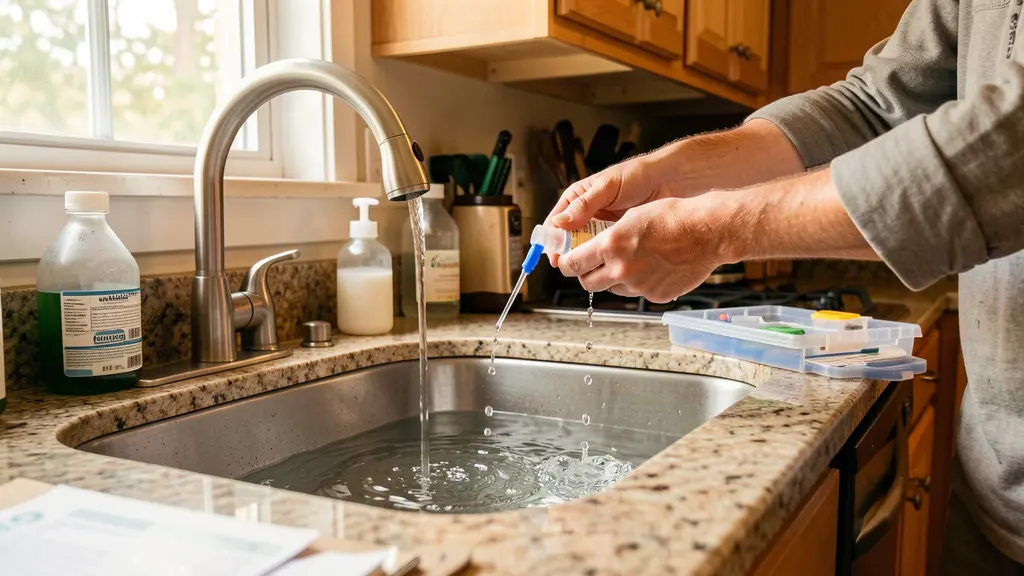
If your well water smells odd, looks discolored, or someone in your family has experienced stomach issues after drinking from the tap, bacterial contamination could be the cause. Coliform bacteria, E. coli, and iron bacteria are the most common biological contaminants in South Carolina wells — and each requires a different treatment approach. This guide walks you through exactly how to test for bacteria in well water, interpret your results, choose the right disinfection method, and prevent future contamination.
We serve homeowners across the SC Midlands, including Orangeburg, Rowesville, Cordova, Bowman, Elloree, Branchville, Denmark, Bamberg, Cope, and Norway. Here is everything you need to know about well water bacteria treatment for your South Carolina home.
Across the SC Midlands, bacterial contamination patterns follow local geology and well construction. Orangeburg County has predominantly shallow wells in sandy soil, which are more susceptible to surface water infiltration after heavy rain. Homes near the Edisto River in Rowesville and Cordova frequently show elevated bacteria levels during wet seasons. Bowman and Branchville sit in lower-lying areas where seasonal flooding can introduce coliform bacteria into groundwater. In Denmark and Bamberg, older well casings are a common entry point for surface contamination. Understanding these local patterns is the first step toward choosing the right well water bacteria treatment.
What Types of Bacteria Are Found in South Carolina Well Water?
The most common bacteria in SC wells fall into three categories, each requiring different treatment approaches:
Total Coliform Bacteria
Total coliform bacteria are indicator organisms that suggest surface water may have entered your well. Finding coliform does not necessarily mean you will get sick, but it means your well is vulnerable to more dangerous pathogens. Coliform bacteria are present in about 15-20 percent of private wells in Orangeburg County based on Dubya Water's free testing data. Treatment typically involves UV sterilization or periodic shock chlorination combined with well repairs.
Escherichia coli (E. coli)
E. coli is a specific coliform bacterium that comes from human or animal waste. Its presence means your well water has been contaminated with fecal matter — from a failing septic system, livestock runoff, or wildlife near the wellhead. E. coli requires immediate action: stop drinking the water, identify and fix the contamination source, then disinfect the entire well system. UV or chlorination systems installed after the pressure tank provide ongoing protection.
Iron Bacteria
Iron bacteria are non-pathogenic but highly damaging organisms that feed on dissolved iron in well water. They produce a slimy reddish-brown biofilm that clogs pipes, stains fixtures, and creates foul odors. Iron bacteria are extremely common in Orangeburg County wells, especially in Cope, Norway, and Bamberg where iron levels exceed 3 ppm. Treatment requires chlorine injection or ozone injection followed by filtration, not just UV light.
How Do I Test My Well Water for Bacteria?
Testing for bacteria is not something you can do with a home test strip. Coliform and E. coli require laboratory culturing. Here is the step-by-step process:
- Request a sterile test kit from a certified lab or from Dubya Water. Sterile containers are essential — using a non-sterile jar will produce false positives.
- Choose the right faucet — Use a cold-water faucet that has no aerator, screen, or hose attachment. Kitchen faucets are preferred. Remove any attachments and clean the faucet opening with bleach.
- Run the water for 2-3 minutes to flush the line. Then fill the sterile container without touching the inside of the cap or bottle to any surface.
- Keep the sample cool and deliver it to the lab within 24 hours. Refrigerate the sample if you cannot deliver it immediately.
- Wait 24-48 hours for results. A "Present" result for coliform means additional testing is needed. A "Present" result for E. coli means immediate action is required.
Dubya Water offers free bacteria testing for homeowners throughout the SC Midlands. We provide the sterile kit, handle the lab submission, and explain your results. Schedule your free test today.
What Are the Best Well Water Bacteria Treatment Options?
Once you have confirmed bacterial contamination, you have three main treatment options. The best choice depends on your specific bacteria type, water chemistry, and budget.
1. UV Disinfection — Best for Coliform and E. coli
Ultraviolet (UV) systems use a germicidal lamp emitting UV-C light at 254 nanometers to destroy the DNA of bacteria, viruses, and cysts. UV is chemical-free, does not alter water taste, and kills 99.99 percent of pathogens instantly. UV systems require electricity 24/7 and need pre-filtration to remove sediment that can shield bacteria from the light. Annual lamp replacement is required. Installed cost: $800-$2,500. Best for homes with coliform or E. coli where water clarity is good (turbidity under 5 NTU).
2. Chlorine Injection — Best for Iron Bacteria and High Contamination
Chlorine injection systems meter a precise amount of chlorine bleach into the water stream, providing continuous disinfection throughout the plumbing system. Chlorine is effective against all bacteria types including iron bacteria, and it provides residual protection — meaning the water stays disinfected as it travels through your pipes. The downside: chlorine alters taste and odor, and requires a contact tank for proper dwell time. Installed cost: $1,200-$3,500. Best for homes with multiple bacteria types or iron bacteria where UV alone is not sufficient.
3. Ozone Treatment — Best for Heavy Iron Bacteria Without Chemicals
Ozone is a powerful oxidizer generated on-site from oxygen. It kills bacteria faster than chlorine, does not leave chemical residuals, and simultaneously oxidizes iron, manganese, and sulfur. Ozone systems are more expensive upfront but require less maintenance than chlorine injection. Installed cost: $2,000-$5,000. Best for homeowners who want chemical-free treatment but have iron bacteria or heavy contamination that UV cannot handle.
Which Well Water Bacteria Treatment Is Right for Your SC Home?
Here is a simple decision guide based on Dubya Water's experience treating hundreds of wells in Orangeburg County:
If your test shows ONLY coliform bacteria and your water is clear — choose UV disinfection. It is cost-effective, chemical-free, and highly reliable.
If your test shows coliform + other issues (iron, sediment, low pH) — UV still works, but you need pre-filtration. Add a sediment filter before the UV unit and address other contaminants separately.
If your test shows iron bacteria — UV will NOT solve the problem. Iron bacteria are protected inside a slime layer that UV cannot penetrate. You need chlorine injection or ozone treatment followed by iron filtration.
If your test shows E. coli — take immediate action. Stop drinking the water. Shock chlorinate the well. Then install a UV or chlorination system for ongoing protection. Fix the contamination source (cracked casing, failing septic, surface water intrusion).
How to Prevent Bacteria in Well Water
Prevention is always more effective than treatment after contamination occurs. Here are the most important prevention steps for SC well owners:
- Inspect your wellhead quarterly — The well cap should be sealed tight with no cracks. The ground around the well should slope away to prevent standing water. Keep the wellhead at least 12 inches above the ground surface.
- Test annually — SC DHEC recommends annual bacteria testing for all private wells. Dubya Water offers free testing that covers total coliform, E. coli, and iron bacteria.
- Check for surface water intrusion — After heavy rain, inspect for puddles around the wellhead. Surface water carrying bacteria can seep down along the well casing if the seal is compromised.
- Maintain proper separation — Your well should be at least 50 feet from septic systems, 100 feet from livestock areas, and 250 feet from manure storage or fertilizer application.
- Service treatment systems annually — UV lamps need yearly replacement. Chlorine injection systems need monthly chlorine level checks. Ozone generators need annual maintenance.
Well Water Bacteria Treatment Costs for SC Homes
| Treatment Method | Equipment Cost | Installed Cost | Annual Maintenance |
|---|---|---|---|
| UV disinfection system | $400-$1,200 | $800-$2,500 | $100-$200 (lamp) |
| Chlorine injection system | $600-$2,000 | $1,200-$3,500 | $100-$300 (chemicals) |
| Ozone treatment system | $1,200-$3,000 | $2,000-$5,000 | $150-$350 |
| Shock chlorination (one-time) | $20-$50 | $150-$400 | N/A (as needed) |
Free Water Testing from Dubya Water
You cannot choose the right well water bacteria treatment without knowing exactly what is in your water. Dubya Water offers free complete water testing for homeowners throughout the SC Midlands, covering total coliform bacteria, E. coli, iron bacteria, hardness, iron, pH, sulfur, manganese, TDS, and nitrates.
Schedule your free water test today. Call 803-855-1055. We serve Orangeburg, Rowesville, Cordova, Bowman, Elloree, Branchville, Denmark, Bamberg, Cope, Norway, and the entire SC Midlands. We will test your water, explain the results, and recommend the exact bacteria treatment system for your well.
Frequently Asked Questions About Well Water Bacteria Treatment
How do I know if my well water has bacteria?
The only way to know for certain is to have your water tested by a certified laboratory. Bacteria cannot be detected by taste, smell, or appearance alone — although a sulfur smell or slimy biofilm can indicate iron bacteria. Coliform and E. coli have no taste or odor at all. Dubya Water provides free sterile test kits and handles lab submission for homeowners throughout Orangeburg County.
Can I get sick from bacteria in well water?
Yes. Coliform bacteria may cause mild gastrointestinal issues, but E. coli can cause serious illness including bloody diarrhea, severe abdominal cramps, and vomiting — especially dangerous for children, elderly, and immunocompromised individuals. Iron bacteria are not pathogenic but cause plumbing damage, staining, and foul odors. Any detection of E. coli requires immediate remediation.
Does boiling well water kill bacteria?
Yes, boiling water for one minute (three minutes at elevations above 6,500 feet) kills coliform, E. coli, and most other pathogens. However, boiling is not a practical long-term solution for whole-house treatment. It also concentrates dissolved minerals like iron and calcium. Boiling is recommended as an emergency measure while you arrange for bacteria testing and permanent treatment system installation.
Will a water softener remove bacteria from well water?
No. Water softeners remove hardness minerals (calcium and magnesium) through ion exchange but do not kill or remove bacteria. In fact, bacteria can colonize softener resin beds if the system is not properly maintained. Bacteria treatment requires dedicated disinfection: UV, chlorination, or ozone. A water softener paired with a UV system provides complete treatment — the softener removes hardness while the UV kills bacteria.
How often should I test my well water for bacteria?
SC DHEC recommends annual bacteria testing for all private wells. Test more frequently (every 6 months) if you have a shallow well, live in a low-lying area prone to flooding, have experienced recent well repairs, or have infants or elderly residents in the home. Dubya Water offers free testing year-round for all our customers and for any SC homeowner who needs peace of mind.
What causes bacteria to suddenly appear in well water?
Bacteria typically enter wells through surface water intrusion after heavy rain, a cracked well casing, a failed well seal, a nearby failing septic system, or flooding. Changes in taste or odor after storms are a red flag. In Rowesville and Cordova, seasonal water table fluctuations near the Edisto River are a common trigger for bacterial contamination.
Frequently Asked Questions
What size whole house water filter do I need for a 3-bedroom home in South Carolina?
A 3-bedroom home needs a system rated for 8-12 GPM (gallons per minute) peak flow. This typically requires a 1.0-1.5 cubic foot media tank for iron filters or softeners, and a 4.5-inch x 20-inch housing for sediment cartridges. Dubya Water verifies pump capacity before recommending any system.
Will a whole house water filter reduce water pressure?
Properly sized systems cause minimal pressure drop (2-5 PSI). Undersized filters, especially those with fine micron ratings (below 5), can restrict flow significantly. The biggest cause of pressure drop is a clogged pre-filter that is why quarterly cartridge changes are essential.
Can I install a whole house water filter myself?
Basic sediment filter housings are DIY-friendly for experienced homeowners with plumbing knowledge. However, iron filters, water softeners, UV systems, and multi-stage configurations require professional installation for proper sizing, backwash drainage, electrical connections, and pressure tank integration. Improper installation can void manufacturer warranties and damage your well pump.
Do I still need a reverse osmosis system with a whole house filter?
Many homeowners add an under-sink reverse osmosis (RO) system after the whole house filter for drinking water. The whole house system handles sediment, iron, and hardness, while the RO removes dissolved solids, lead, arsenic, fluoride, and nitrates for the highest-quality drinking water.
What is the best whole house filter for sulfur smell in SC well water?
Catalytic carbon filtration is the most effective single treatment for hydrogen sulfide (rotten egg smell). For moderate sulfur levels (0.5-2 ppm), a backwashing catalytic carbon filter usually resolves the issue. Higher levels may require an aeration system or chlorine injection followed by carbon filtration.
How long does a whole house well water filter system last?
The filter housing, tanks, and control valves typically last 15-20 years with proper maintenance. Media needs replacement at intervals: sediment cartridges every 3-6 months, carbon media every 3-5 years, iron filter media every 5-10 years, softener resin every 10-15 years, and UV lamps annually. Dubya Water backs every installation with a 10-year warranty on parts and labor.
Call 803-855-1055 for a Free Water Test and Bacteria Treatment Estimate
Serving Orangeburg, Rowesville, Cordova, Bowman, Elloree, Branchville, Denmark, Bamberg, Cope, Norway, and all of the SC Midlands.