How to Remove Sediment from Well Water
By Dubya Water | October 09, 2026 | 11 min read
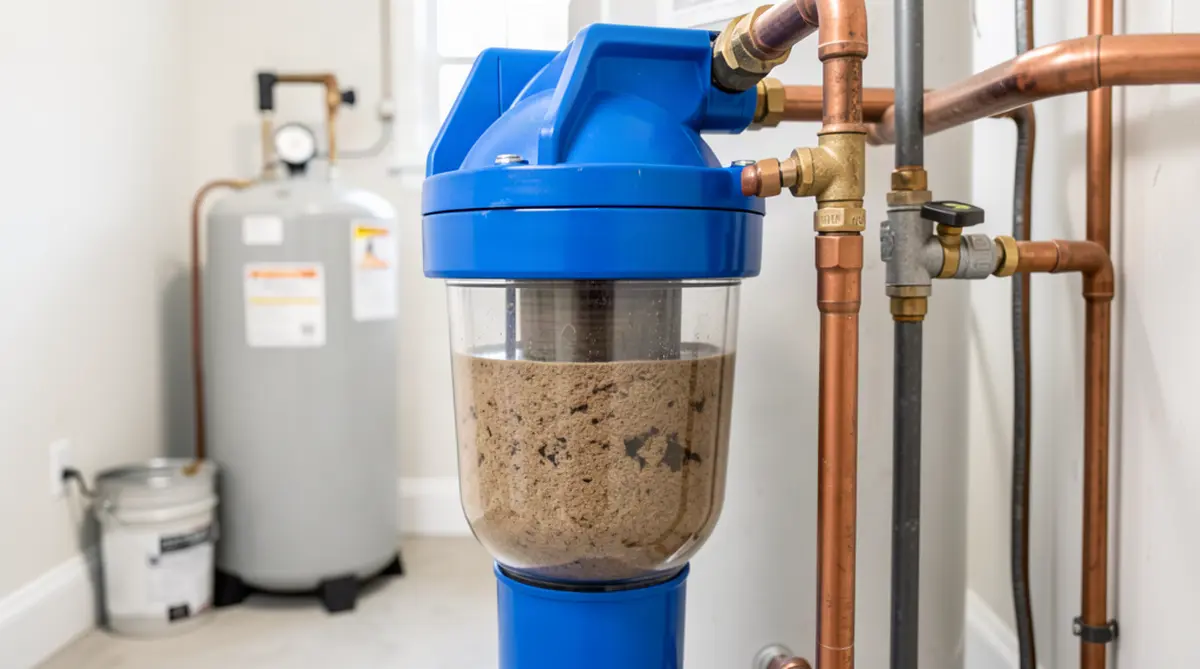
The most effective way to remove sediment from well water is a two-stage whole-house filtration setup: a spin-down filter or 20-micron cartridge pre-filter catches sand and grit, and a backwashing media filter removes fine silt and turbidity. For most South Carolina wells this combination clears 95 percent or more of visible sediment. This guide covers the causes of sandy well water, every filter option, real installed costs, and the step-by-step removal process we use on wells across Orangeburg County.
Why Is There Sediment in My Well Water?
Sediment is the single most common complaint from well owners in Orangeburg County, and it usually falls into three buckets: sand (coarse particles that settle at the bottom of a glass), silt or clay (fine particles that make water look cloudy or milky), and rust flakes (dark or reddish particles that come from iron in the water and corroding pipes).
Sand and Grit: The Well Screen Problem
Sand in well water almost always means the well screen or casing has failed, or the pump intake is sitting too close to the bottom of the borehole. In the sandy aquifers under Rowesville, Cope, and Norway, wells drilled decades ago are especially prone to screen failure as the casing corrodes. If your water suddenly runs sandy, the well itself may need repair, but filtration protects your plumbing in the meantime.
Silt and Clay: Cloudy Water That Won't Settle
Fine silt and clay particles stay suspended in water, turning it a cloudy brown or tan even after sitting in a glass. This is common in shallow wells and in areas with heavy clay soils like parts of Bamberg and Denmark. A standard cartridge filter may clog fast; a backwashing media filter is usually the right fix.
Rust Flakes: Iron, Not True Sediment
Dark, rust-colored particles in your water are often oxidized iron rather than sand. If the particles are accompanied by orange staining on fixtures, your primary problem is iron in well water, and a dedicated iron filter is the real solution. A sediment pre-filter still helps, but it will not fix the staining by itself.
What Is the Best Filter for Removing Sediment from Well Water?
The best sediment filter depends on what kind of particles you are dealing with. Most Orangeburg County homes end up with a two-stage system, and here is how the main options compare.
| Filter Type | Best For | Micron Range | Installed Cost |
|---|---|---|---|
| Spin-down filter | Sand, gravel, large grit | 60-200 | $200-$450 |
| Cartridge filter (big blue) | General-purpose sediment | 1-50 | $150-$500 |
| Backwashing sand/media filter | Fine silt, cloudy water, high sediment loads | 20-100 | $1,200-$2,800 |
| Whole-house multi-stage system | Sediment + iron + hardness combined | 5-50 | $2,500-$5,500 |
Spin-Down Filters: The Sand Stopper
A spin-down filter uses centrifugal force to fling sand and grit to the bottom of a clear bowl, where you purge it out through a flush valve. It needs no cartridges, handles heavy sand loads without clogging, and is the first thing we recommend for homes in Cope and Norway where sandy aquifers are the norm.
Cartridge Filters: Simple and Effective
A 4.5x20-inch big blue housing with a 20-micron polypropylene cartridge catches sand, silt, and rust flakes and is the workhorse of most SC well systems. Cartridges cost $10-$25 each and are swapped every 2-6 months. Use 20-30 micron for general protection; drop to 5 micron only if you do not mind faster clogging.
Backwashing Media Filters: For Cloudy, Silt-Heavy Water
When water is chronically cloudy, a backwashing filter filled with sand or specialty media captures fine particles and flushes them down the drain automatically on a timer. This is the upgraded solution for Bowman and Bamberg homes battling clay silt that blows through cartridges in weeks.
How Much Does It Cost to Remove Sediment from Well Water?
Costs in the SC Midlands are modest compared to other water problems. A homeowner fighting sand near Rowesville typically spends $200-$450 on a spin-down filter installed, while a full two-stage sediment system runs between $1,000 and $2,800 including labor.
| Setup | Equipment | Installed Cost | Yearly Maintenance |
|---|---|---|---|
| Spin-down filter only | $100-$250 | $200-$450 | $0 (self-flushing) |
| Single cartridge housing | $60-$180 | $150-$500 | $40-$120 (cartridges) |
| Two-stage: spin-down + cartridge | $180-$350 | $350-$750 | $40-$120 |
| Backwashing media filter | $600-$1,800 | $1,200-$2,800 | $50-$150 (media) |
| Full system with softener + iron filter | $1,500-$3,500 | $2,500-$5,500 | $150-$400 |
How to Remove Sediment from Well Water: Step by Step
- Test the water and confirm the source. A professional test distinguishes sand, silt, clay, and rust. Dubya Water offers free water testing in Orangeburg and across the Midlands, and we check the well itself for screen or pump issues before selling you a single filter.
- Install a pre-filter after the pressure tank. The sediment filter goes downstream of the pressure tank so it protects the entire house without starving the pump. A 20-micron cartridge or spin-down unit handles the bulk of the load.
- Add a backwashing filter for fine sediment. If water is still cloudy after the cartridge, add a backwashing media filter sized to your home's peak flow (8-12 GPM for a typical 3-bedroom house).
- Protect downstream equipment. Place sediment filtration ahead of the water softener in Orangeburg, iron filter, and water heater so abrasive particles never reach resin tanks, control valves, or heating elements.
- Schedule maintenance. Flush spin-down filters weekly, inspect cartridges monthly, and service backwash valves annually. Cartridge replacement runs 2-6 months depending on sediment load.
- Retest annually. Well conditions change. A yearly test catches new contaminants and confirms your system is still performing.
Why Is My Well Water Cloudy Even After a Sediment Filter?
If a sediment filter is installed but water is still cloudy, the most common causes are: micron rating too coarse (a 50-micron cartridge lets fine silt through), air in the lines (looks like cloudy water but clears in a glass from the bottom up), water that is too hot (dissolved minerals precipitate when heated), or iron bacteria (a slimy orange or brown film that no sediment filter removes). If your cloudy water has an iron smell or leaves a greasy film, check our guide to iron removal for well water.
Do I Need a Water Softener or Iron Filter Alongside Sediment Filtration?
Most Orangeburg County wells do not have a single problem, they have two or three. Sediment filtration removes particles, but it does not soften hard water, and it does not remove dissolved iron. A complete treatment train usually combines a sediment pre-filter with a water softener and, where tests show iron above 0.3 ppm, a dedicated iron removal system. A free test tells you which stages your home actually needs, so you never pay for equipment you do not need.
Can I Remove Sediment Myself or Should I Hire a Professional?
Installing a single cartridge housing is a DIY-friendly weekend job if you are comfortable with basic plumbing. Backwashing media filters involve control valves, drain lines, electrical connections, and pressure tank integration, and a mistake can void warranties or damage your well pump. For most homeowners near Elloree, Branchville, and Denmark, professional installation pays for itself in correct sizing and a 10-year warranty.
Frequently Asked Questions
What is the best micron rating for a well water sediment filter?
20 microns is the best all-around rating for well water: it catches sand, silt, and rust while keeping flow high and cartridges lasting 2-6 months. Use 30-50 microns for heavy sand loads, and go to 5 microns only for polishing after a coarser stage.
Will a sediment filter remove iron from well water?
No. Sediment filters trap solid particles only. Dissolved iron needs oxidizing media (Birm, Katalox Light, or Greensand) in a dedicated iron filter. Rust flakes, which are already solid, will be caught by a sediment filter, but clear-water iron will pass straight through.
How long does a backwashing sediment filter last?
The fiberglass tank and automatic control valve typically last 15-20 years. The media inside lasts 5-10 years before replacement. With annual servicing, a quality system installed by Dubya Water carries a 10-year parts and labor warranty.
Is sandy well water safe to drink?
Sand itself is not a health hazard, but it signals wear in the well system, damages appliances, and can carry contaminants into the plumbing. Sediment in water also harbors bacteria. Filter the sediment and retest for coliform bacteria to be sure the water is safe.
Can sediment ruin a water heater or washing machine?
Yes. Sand and grit act like sandpaper on water heater elements, washing machine valves, and dishwasher solenoids. Homes with heavy sediment frequently replace appliances years early. A $300 pre-filter is far cheaper than a water heater.
Where can I get a free water test near me?
Dubya Water provides free complete water testing for homeowners in Orangeburg, Rowesville, Cordova, Bowman, Elloree, Branchville, Denmark, Bamberg, Cope, and Norway. Call 803-855-1055 to schedule, and we will also inspect your well for screen and pump issues at no charge.
Call 803-855-1055 for a Free Water Test and Estimate
Serving Orangeburg, Rowesville, Cordova, Bowman, Elloree, Branchville, Denmark, Bamberg, Cope, Norway, and all of the SC Midlands.